Tag: #lowinventory

  • Phoenix Area Real Estate Update 7/17/2020

    Consumer sentiment has the greatest impact on our economy. It is more powerful than any piece of information or event. With today’s incredibly polarized media where everyone has an agenda, it is almost impossible to get accurate information. The headlines often conflict with what is actually happening, let’s talk about the real numbers.

    For example, look at the second quarter stock market returns versus the economic data. Investors have no idea why the markets ended so well when there was so much bad news in every headline. The S&P 500 increased by nearly 20%, the Dow Jones increased by nearly 18%, and the NASDAQ was up nearly 31%! Almost all of March’s losses were made up and the NASDAQ actually increased from previous highs. (Jeremy Kisner, Surevest Wealth Management)

    Suze Orman, a personal finance expert, not a real estate expert, is advising that now is a bad time to buy a house. That is as helpful as a dentist doing your taxes. Unfortunately for us, she has a large audience.

    Lendingtree released a study stating that 87% of home sellers are concerned about selling due to the pandemic, yet 372,000 homes sold in June. Our pendings are higher than they were 12 months ago and prices are increasing. Houses are selling faster today than they have in years.

    Last week I wrote about a report, from Apartment List, stating 32% of Americans did not make their housing payment the first 3 days of July. The same report said 30% did not make their June payment in the first 3 days of the month. These numbers were so high I dug deeper and found better data.

    According to the US Census Bureau Household Pulse Study, of the nearly 74 million renter-occupied housing units in the country, roughly 16% did not make their June payment. And of the nearly 150 million owner-occupied properties in the country, 5.5% did not make their June payment.

    In Arizona, of the just over 1.6 million renter-occupied properties 9% did not make their June payment. And of the nearly 3.5 million owner-occupied properties in AZ, only 3.3% did not make their June payment. (US Census Bureau Household Pulse Study)

    Forbearance:

    Mortgages in forbearance declined again, for the fourth week in a row. 8.18% of all mortgages are in forbearance, down from 8.39% the previous week. (Mortgage Bankers Association)

    One third of mortgages in forbearance are late on their payments. Two thirds are current. (KCM)

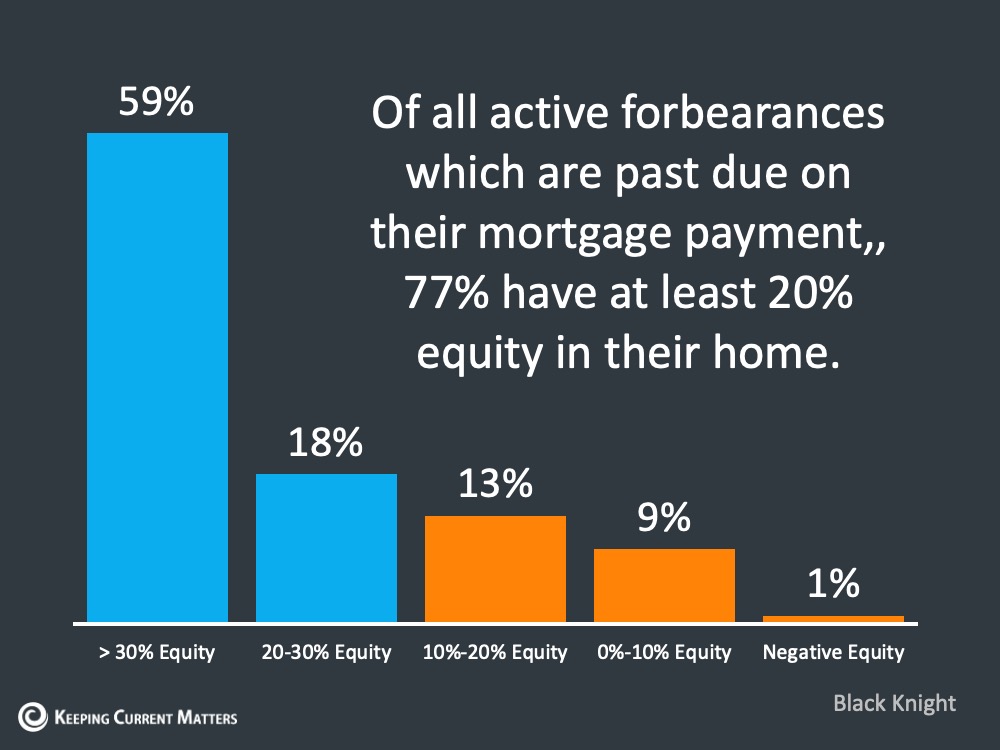
    Going deeper, of all the mortgages in active forbearance that are late on their mortgage, 77% have at least 20% equity. Only 10% of the past due mortgages have 10% or less equity. (Black Knight)
    Price Projections:

    There is a wide range of price projections emerging from top real estate experts. Mortgage Bankers Association projects a 4% annual appreciation and Corelogic, a clear outlier, expects a 6.6% depreciation. David Childers at KCM reached out to the chief economist at CoreLogic asking about this projection and was told it was entirely based on expected low demand solely due to unemployment. They did not address the lack of supply. That seems very odd when supply and demand are the fundamentals of pricing.

    Unemployment:

    According to the US Census Bureau, 46% of the people who do not have a job and are over the age of 18 live in households with an income of less than $50,000 a year. These households tend to rent.

    1.3 million people filed for unemployment for the first time this week, continuing the week over week decline for 15 weeks straight.

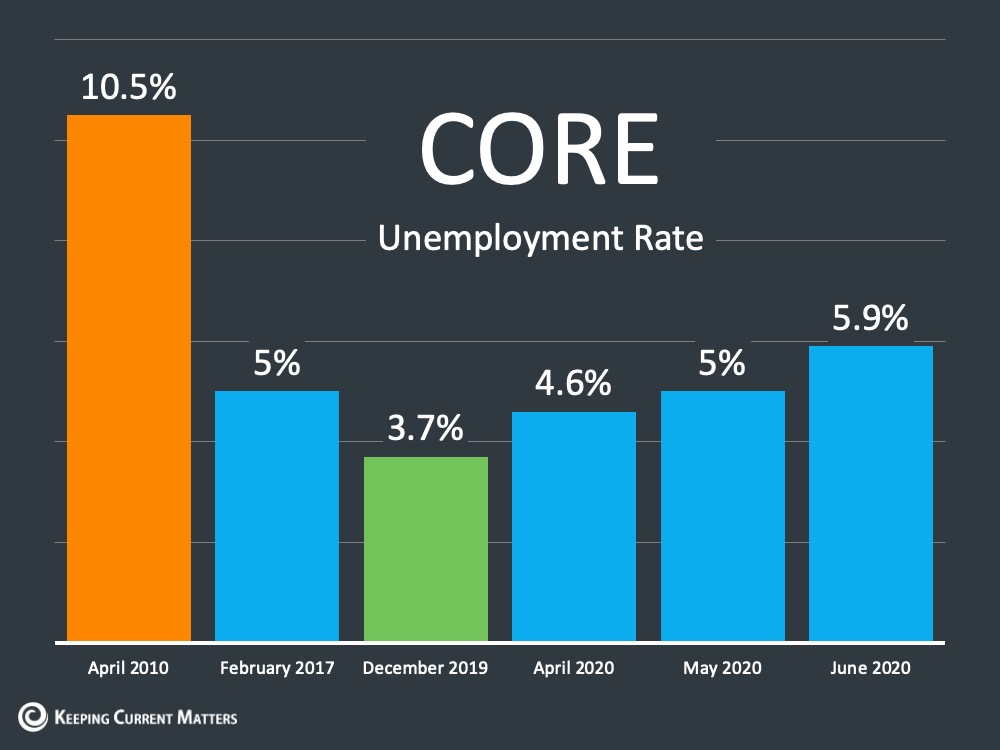
    There are two types of unemployment temporary and Core or permanent unemployment. June’s Core unemployment was 5.9%. For comparison, it was 10.5% in April 2010 and 5% in February 2017. (KCM)
    Future of Housing:

    Windermere Chief Economist Matthew Gardner said, “We are exactly 120 days into this pandemic and, as much as there were some who fully anticipated that the U.S. housing market would have collapsed already, it simply hasn’t happened — and won’t happen.”

    As economies reopen, we will likely see increases in listings. However, with the surges of new COVID-19 cases across the country (AZ isn’t the worst anymore!) sellers may delay selling, keeping inventories low and prices rising quickly.

    As the CARES Act is set to expire at the end of the month, delinquencies may rise and that may impact housing however, with the high equity rates, the potential “distressed“ listings will still be regular sales.

    The AZ Market:

    Cromford Market Index (CMI): The CMI is the best leading indicator available (balance is 100, above 100 is a seller’s market, below 100 is a buyer’s market, prices rise at 110, and drop at 90). Yesterday it was 279.4, higher than the pre-COVID peak of 241 and significantly up from the bottom of 145.2 we hit on May 15. Up over 21 points in the past 7 days.

    Supply: Our local inventory has been dropping every day since May 12. As of yesterday, our inventory is over 60% below normal. Our total active inventory is down 30% year over year. When we remove under contract accepting backups (UCB) we are down 43% year over year. We desperately need more listings.

    Demand: Pending sales are up 16% year over year, which is a big deal given how much lower our inventory is. Our demand is 11.5% above normal and increased nearly 4% in the past seven days.

    Sales & Prices: Phoenix metro area closed sales are up 10% year over year. The median sales price is up 5% month over month and over 11% year over year. Healthy appreciation is 3% annually.

    Southeast Valley New Listings, Pendings, and Closings:  This week over week comparison for Tempe, Mesa, Chandler, Gilbert, Apache Junction, and Queen Creek since March 15 shows the continuation of demand outpacing supply. Closings always spike at the end of the month.

    Other AZ News:

    • Phoenix ranks #16 in the country for in most valuable residential real estate with a total value of $484 billion. (Lendingtree)
    • According to WalletHub Phoenix is the 41st most stressed-out city in the country. We have among the lowest financial, family, health, and safety stress but we are experiencing incredibly high work stress because we have the strongest job market in the country and have lost the fewest jobs. This means more of us are trying to juggle the stress of the world today while continuing to perform at work.
    • Phoenix area builder permits pulled in June increased by 9.6% year over year. (Home Builders Association of Central Arizona)
    • According to the Realtor.com Housing Market Recovery Index, the Phoenix metro area has completely recovered from the pandemic slow down. This index combines supply, demand, price, and days on market.

    Emerging Trends:

    • Realtor.com traffic hit an all-time high in June with 86 million unique visitors, breaking the previous record of 85 million in May. (Move.com)
    • Household savings rates are up 8% year over year, the highest since the early 1990s. (KCM)
    • Spending by the bottom 25% of earners has recovered from the 23% drop in March, while spending by the top 25% of earners is still down 17% though up from the 31% drop in March. The discretionary spending reduction continues to hurt the low-income earners who are the often the workers at salons, movie theaters, and restaurants. (Elliot Eisenberg)
    • Commercial real estate investors are starting to buy office buildings at 10-30% discounts in gateway cities. (Bisnow)
    • Meanwhile, industrial real estate sales prices continue to increase. (Bisnow)

    Other Real Estate News:

    • Mortgage interest rates hit all-time lows, again, keeping the demand high as every percentage drop equals roughly $40,000 of buying power.
    • According to Zillow, luxury home listings are recovering quickly while affordable home listings continue to decline, down 29% year over year.
    • Dotloop, the Zillow owned competitor of Skyslope, has a new third party data sharing policy. Agents using the platform need to opt-out of sharing the data rather than the typical opt-in. (Zillow)
    • In October, when the US Supreme Court reconvenes, they will determine whether or not the structure of the Federal Housing Finance Agency (FHFA) is constitutional. They recently ruled that the structure of the CFPB was unconstitutional.
    • According to the recently released Consumer Federation of America study, agent profiles on Zillow are the most useful for consumers; compared to Realtor.com, Yelp, Facebook, and Homelight.
    • New Silicon Valley start-up, Juno, is “reimaging” multi-family building. The prop-tech company is looking to disrupt the building process. (Jim Dalrymple, Inman)
    • In Fort Worth TX, a struggling multifamily property owner is suing the US Government challenging the eviction moratorium in the CARES Act. (Bisnow)
    • Knock.com is pivoting their model and instead of purchasing property they now offer mortgage financing, bridge loans, and concierge services. They are no longer working direct to consumer and will only partner with real estate agents.

    Final Thoughts:

    The negative news is growing at an alarming rate and the headlines are misleading. With so much bad info, it is important that you talk to your clients about what is really happening in real estate. Share this info, make videos, call your sphere, continue being the solution during these uncertain times.

    Happy Birthday Mom! I can’t wait until I can see you in real life again!

    Copyright 2020 by Sarah Perkins

  • Phoenix Area Real Estate Update 7/10/2020

    Maybe the 10 years of growth were the calm before the storm. Even if it was not, the storm is here now. As we adapt to extreme inventory shortages, get comfortable in our masks, and try to stay healthy we now face a new challenge, surviving economic re-closures. Pending sales are up, buyer demand is up, inventory is down.

    “This has been a spectacular recovery for contract signings, and goes to show the resiliency of American consumers and their evergreen desire for homeownership,” NAR Chief Economist Lawrence Yun said, “This bounce back also speaks to how the housing sector could lead the way for a broader economic recovery.” I hope that real estate can continue to lead the economy towards recovery despite the significant headwinds we are now facing.”

    The AZ Market:

    Cromford Market Index (CMI): The CMI is the best leading indicator available (balance is 100, above 100 is a seller’s market and below 100 is a buyer’s market. Prices rise at 110 and drop at 90). Yesterday it was 258.3, higher than the pre-COVID peak of 241 and significantly up from the bottom of 145.2 we hit on May 15. Up over nearly 26 points since July 1.

    Supply: Our local inventory has been dropping every day since May 12. As of yesterday, our inventory is 58% below normal. Our total active inventory is down nearly 28% year over year. That sounds like a lot; then when we remove under contract accepting backups (UCB) we are down 42% year over year. We desperately need more listings.

    Demand: Pending sales are up over 6% month over month and up 17% year over year, which is a big deal given how much lower our inventory is. Our demand is 7.7% above normal and increased by nearly 6% in the past fourteen days. According to Showing Time, in AZ, physical requests which recovered and from the March-April drop are dipping again, likely due to the low inventory. We are now 9.6% down year over year and 17.8% off the pre-COVID peak. Again, buyers cannot look at (or buy) houses that are not for sale.

    Sales & Prices: Phoenix’s closed sales are up 5.5% year over year. The median sales price is up 8.2% year over year.

    Southeast Valley New Listings, Pendings, and Closings:  This week over week comparison for Tempe, Mesa, Chandler, Gilbert, Apache Junction, and Queen Creek since March 15 shows this week’s increased demand and decreased supply. Closings always increase at the end of the month.

    Other AZ News:

    • Amazon paid $19.85M for 91.5 acres in Goodyear.
    • Mountainside Fitness is suing Governor Ducey over the recent executive order closing gyms due to the surge in new COVID cases in AZ. The gym alleges that the order violates the AZ constitution by not allowing the company to prove that they are not a health risk.
    • A partnership with Davcon Aviation and Mesa Hangar to create a $60M aviation project breaks ground in a Mesa opportunity zone.
    • Wallethub released a study of the 2020 best and worst cities for first time home buyers. Gilbert ranked #5 and Chandler ranked #11. For the full list of cities and their rankings:  https://wallethub.com/edu/best-and-worst-cities-for-first-time-home-buyers/5564/

    Unemployment:

    Initial unemployment claims this week dropped again to 1.3 million, slightly lower than the previous week’s 1.5 million, which continues the weekly decline every week since the end of March.

    4.8 million jobs were added in June dropping the unemployment rate to 11.1% from May’s 13.3%. According to the US Department of Labor, the real estate sector, not including rentals, added over 18,000 jobs. The late June re-closures and re-opening delays will be seen in July’s unemployment report. Most economists are not as optimistic as they were mid-June. While jobs are still down 14.7 million since February, the 7.5 million total jobs regained in May and June is quite impressive.

    66.5% of the unemployed are under 35. And of that group, 53.1% are under 25. According to the NAR buyer and seller report only 3% of homeowners are under 25.

    Forbearance:

    Of all active mortgages in forbearance that are past due on their payment, 77% have at least 20% equity in their home. At least 90% have positive equity, reducing the likelihood of a flood of foreclosures.

    Mortgages in forbearance dropped for the third week in a row. According to the Mortgage Bankers Association, 8.39% of mortgages are in forbearance, down from 8.47% last week. Borrowers are opting out and looking at other relief options.

    Emerging Trends:

    • Historic low rates have made homes more affordable despite the higher price tags. According to NAR today only 14.6% of income is needed to make a mortgage payment. In June of 2018 it was 18.2% and the historic normal is 21.2% of income.
    • After a decade of growth in public transportation use, the car is king again. More people are leaving city centers where cars are less necessary and going to smaller metros with fewer public transportation options.
    • After decades of closures, drive-in movie theaters are making a come back. Pop-up drive-in theaters are emerging in mall parking lots and other unused large open commercial spaces.
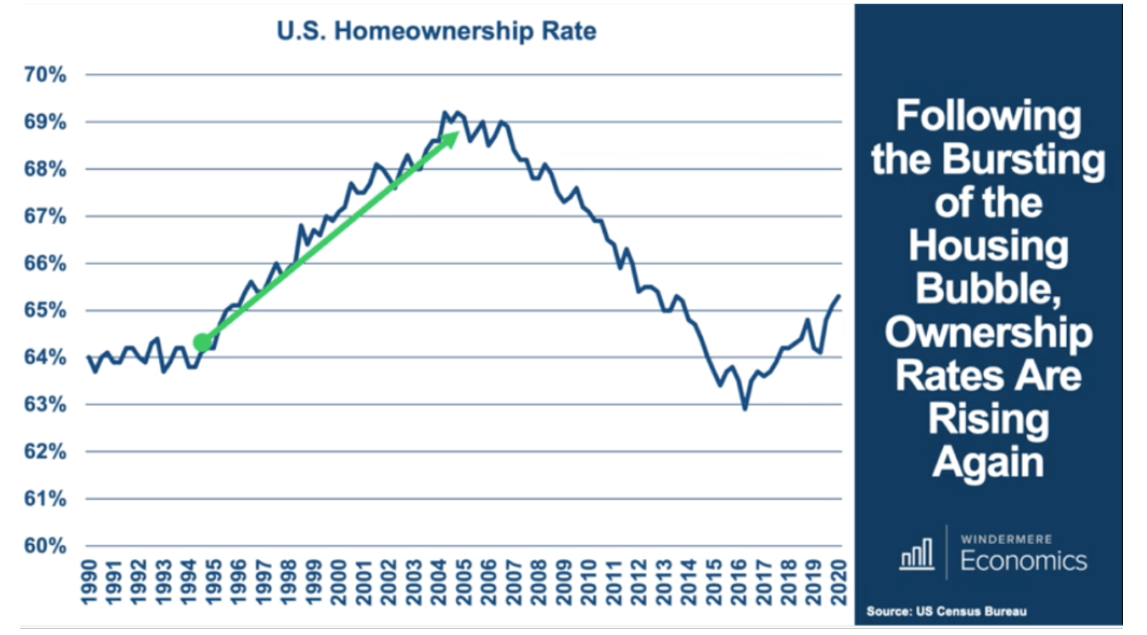
    • Homeownership rates increased from 1990 to 2006. In 2006 they began dropping bottoming out in 2016 at levels lower than they have been since 1990. Since 2016 they have again been on the rise. However, builders have not kept up with the rising homeownership rates leading to historically low inventory levels today. These low inventory levels are pushing prices up faster than incomes are rising.
    • In response to the skyrocketing home prices, state and local legislators across the country working to pass upzoning laws. This would allow multi-family housing structures on land zoned for single-family residences. Oregon and Minneapolis passed these laws in 2019. These laws face staunch opposition as multi-family buildings often reduce the value of the neighboring single-family properties.
    • Commercial mortgage-backed security delinquency rates increased to 10.32% in June, nearly hitting an all-time high. The June 2019 delinquency rate was 2.84%.
    • According to the Federal Reserve, the results for the Dodd-Frank mandated stress tests required for banks show that the largest American banks (Wells Fargo, Citibank, Chase, and Bank of America) could lose as much as $47.6 billion on commercial real estate loans over the next two years.
    • According to a study by Apartment List released Wednesday, 32% of Americans did not make a complete July housing payment. Of the 32%, 13% made a partial payment and 19% made no payment. 36% of renters did not make their full payment. Of the 30% of homeowners that did not make a full payment, 18% made no payment. These numbers seem very high.
    • *Please note this info from June data, “It continues to be the case that the majority of payments missed in the first week of the month are made up with late payments. 89 percent of respondents reported that they had paid their June bill in full as of the first week of July. This is consistent with the end-of-month payment rate for prior months.” For more details https://www.apartmentlist.com/research/july-housing-payments

    Other Real Estate News:

    • Last week the US Supreme Court ruled that the Consumer Financial Protection Bureau (CFPB)’s structure is unconstitutional. The agency was created in the Dodd-Frank Act of 2010 to protect consumers from predatory lending practices. They ruled that the whole agency is not unconstitutional. Chief Justice John Roberts stated, “The CFPB’s single-director configuration is also incompatible with the structure of the Constitution, which — with the sole exception of the Presidency — scrupulously avoids concentrating power in the hands of any single individual.”
    • Last week Airbnb announced new policies to crack down on party houses to further prevent large gatherings, especially as COVID cases surge across the country. Renters under 25 who have fewer than 3 positive reviews will not be able to book single-family residences near where they live.
    • The new Chinese National Security Law cracking down on dissent in Hong Kong is making American real estate investors question their investments. Soon Hong Kong may no longer be a destination for future real estate investment. These investors are looking at other global opportunities.
    • Quicken Loans filed for IPO as Rocket Companies.
    • The real estate industry received 3% of the total money distributed by the Paycheck Protection Program (PPP) 
    • Economist Elliot Eisenberg said, “As part of the CARES Act, lenders that allow borrowers to defer debt payments may not report those payments as late to credit-reporting firms. As such, borrower FICO scores are no longer as good at separating good borrowers from the bad. As a consequence, many lenders are compensating by tightening standards for all consumer loans, credit cards, and auto loans, depriving deserving households of credit, until they can figure out Plan B.”

    Final Thoughts:

    NAR expects to see a total of 4.93 million resale transactions in 2020. In 2021 they project resale transactions to hit 5.35 million. In 2019 we had 5.34 million resale transactions. Some experts say these are lofty goals. However, with proper guidance and education, we can make it happen.

    This is a great time to sell. Do not get distracted by the negative media; the best way to be part of the solution is by getting accurate information out and guiding your clients with the facts.

    Copyright 2020 by Sarah Perkins

  • Phoenix Area Real Estate Update 6/26/2020

    The top real estate experts and economists expect to see a strong housing market through the summer. While there is no reason to expect anything but positive growth, there are a number of outside factors that could negatively impact the housing market. It is important to be mindful while being optimistic. Shifts of this magnitude have never happened so quickly and there are no guarantees. This is not the market for “wait and see.”

    The AZ Market:

    Cromford Market Index (CMI): The CMI is the best leading indicator available (balance is 100, above 100 is a seller’s market and below 100 is a buyer’s market. Prices rise at 110 and drop at 90). On March 20, the CMI peaked at 241, and yesterday it was at 214.3, up from the bottom of 145.2 we hit on May 15 and up over 20 points in the past seven days.

    Supply: Our local inventory has been dropping every day since May 12. As of yesterday, our inventory is 54% below normal. In the past seven days we have dropped by 2.4%. Our total active inventory is down nearly 28% year over year. That sounds like a lot; then when we remove under contract accepting backups (UCB) we are down 42% year over year. We desperately need more listings.

    Demand: Pending sales are up over 18% month over month and up 15% year over year. Our demand is 1.4% below normal and increased by nearly 10% in the past fourteen days. According to Showing Time, in AZ, physical requests peaked on February 22 and then immediately dropped by 63% through mid-April. We made up that drop and then some and have seen a slight decrease of nearly 2% in the past week. Buyers cannot look at houses that are not for sale. Inventory continues to struggle to keep up with demand.

    Sales & Prices: Phoenix’s closed sales are down just over 15% year over year; nationally we are down 27% year over year. The median sales price is 8.4% up year over year. Dr. Lawrence Yun, NAR’s chief economist, said, “Sales completed in May reflect contract signings in March and April — during the strictest times of the pandemic lockdown and hence the cyclical low point. Home sales will surely rise in the upcoming months with the economy reopening and could even surpass one-year-ago figures in the second half of the year. New home construction needs to robustly ramp up in order to meet rising housing demand. Otherwise, home prices will rise too fast and hinder first-time buyers, even at a time of record-low mortgage rates.”

    Southeast Valley New Listings, Pendings, and Closings:  This week over week comparison for Tempe, Mesa, Chandler, Gilbert, Apache Junction, and Queen Creek since March 15 shows this week’s increased demand and decreased supply. Only time will tell if it is pent up demand or actual demand. Based on February’s demand it is likely to be actual. Closings always increase at the end of the month.

    Other AZ News:

    Multi-billion dollar business, Smead Capital Management announced their relocation from Seattle to the Camelback Corridor in Phoenix. Despite higher taxes in Phoenix, the company’s president and CEO, Cole Smead, is moving the company because of the lower cost of living and a larger pool of talent for recruiting in Phoenix. He also stated, “The unrest that has taken place in the city of Seattle … there really is not a downtown business community today.”

    Arizona gained 45,300 jobs in May, which is impressive since the economy did not reopen until May 16. That is an increase of 2.4% and above the national average. Arizona’s unemployment rate through May was 8.9% which is better than the national unemployment rate of 13.3% through May. Arizona is second to Utah for employment performance year to date, meaning our state retained the second most jobs of any state by percentage of the population.

    Phoenix metro is the fastest-growing major employment market in the country year to date. That means we have lost the fewest jobs, as a population percentage, in the country. This could have major implications for real estate. A larger employed population could lead to fewer potential issues down the road.

    Economy:

    Prior to COVID, we used quarterly economic data to analyze the market and create projections. Today’s environment is changing too quickly for that data to be sufficient so we have to use other options, daily or weekly data, known as high-frequency data, which is what we have to use today to analyze the economy. These are high-frequency data points:

    • Vehicle sales were up 44% in May over April. Vehicle sales make up about 20% of retail sales. Year over year retail sales are down only 6.1%.
    • Hotel occupancy rates reached nearly 42% last week, up from the bottom of 32% the week of May 18. It is still down 42% year over year.
    • TSA’s weekly traveler report shows the week of June 13 we were down 82% year over year which is better than the 91% year over year drop we had in mid-May.
    • According to OpenTable, restaurant reservations are down 64% year over year as of June 18.
    • Seated diner traffic in Phoenix is down 51.2% year over year, an improvement from the year over year decline of 84% last month.
    • Steve Hafner, the CEO of OpenTable, predicts up to 25% of US restaurants will permanently close. The Independent Restaurant Coalition predicts up to 80% of independent restaurants will close permanently. There are roughly one million restaurants nationwide, that prior to the pandemic employed roughly 15.6 million people.

    National Unemployment:

    There were 1.4 million new unemployment claims filed this week bringing the total number from mid-March to 47 million. Continuing claims dropped slightly to 19.5 million. Check out this chart from Matthew Gardner, Chief Economist for Windermere.

    Forbearance:

    According to Elliot Pollack, there are roughly 100 million loans, of varying types, on some sort of COVID relief program. This includes 4.2 million mortgages, 79 million student loan accounts, 7.3 million car loans, 1.3 million personal loans, and millions not paying rent or credit card balances.

    The good news (for lack of a better term) came from the Mortgage Bankers Association when they announced mortgage loans in forbearance decreased for the first time since March. For the week ending on June 14 total mortgages in forbearance dropped to 4.2 million, down from 4.3 million the week before. 8.48% of mortgages are currently enrolled in a forbearance program.

    Emerging Trends:

    • According to Zillow 2.7 million adults aged 18-25 have moved back in with their parents during March and April. That is a 9.7% increase in April year over year and 1.4% of the national rental market.
    • Home improvement spending is up. According to Lending Tree personal loans for home improvement is up nearly 8% year over year.
    • Large office buildings and other commercial property owners are re-evaluating policies regarding elevator and stair usage in order to maintain social distancing. High rise office buildings have to come up with new solutions to transport people to their destination.
    • Worldwide mass transit demand is down 59% since January.
    • According to the Urban Land Institute (ULI), there are about 13.5 million families renting making up about 1/3 of total renters. The ULI is calling for developers to create more rental options for families as this sector is expected to grow.
    • Shifts between the suburbs and the city are cyclical. From 2010 through 2018 cities grew faster than suburbs but as time went on the city demand slowly decreased as the suburban demand increased faster. Today’s shift towards the suburbs started in 2019 but was significantly escalated by the pandemic.
    • Vacation rentals are in high demand. The ones that are doing the best are the ones within about 2.5 hours of a large metro area. More people are driving to their vacations than flying.
    • As more businesses relocate to the suburbs, car dependency is expected to grow.
    • According to a survey by Apartment List, 30% of respondents said that they are less likely to move due to COVID 19. The report stated, “While Americans have historically moved more frequently than those in many other countries, the U.S. mobility rate has actually been declining for the past 35 years. According to the Census Bureau, over 20 percent of Americans changed homes in 1985; by 2019, that rate had been cut in half.”

    Other Real Estate News:

    • 42% of US homes are owned free and clear
    • Mortgage loan applications are up 20.1% year over year at an 11 year high.
    • There are 128 million houses in the US. 22.7 million are non-owner occupied. 6 million of those are owned by institutional investors like Blackstone. 16.7 million are owned by regular people or small investors.
    • Starbucks is changing its café’s footprints and closing about 400 locations while adding 300 new locations that do not offer dine-in options.
    • Homesnap and eCommission launched a new payment option that allows agents to purchase Homesnap products using future commissions.
    • According to HireAHelper.com the moving industry will have a revenue drop this year in a range of 12.2%-19.9% or an estimated $1.5 billion to $2.5 billion.
    • The exclusive iBuyer partnership with Offerpad and Keller Williams has ended, likely because of last week’s announcement that Offerpad will be listing and selling along with iBuying, putting them in direct competition with Keller Williams. KW will now also be working with other undisclosed investors for its iBuyer program.

    Final Thoughts:

    Coldwell Banker CEO, Ryan Gorman said, “If you’re contemplating moving, or are one of many people who are contemplating accelerating your life plan a bit, now is a moment to get your property into inventory. Get it prepared, get it priced, and get it on the market.”

    This is a great time to sell. Do not get distracted by the negative media; the best way to be part of the solution is by getting accurate information out and guiding your clients with the facts.

    Copyright 2020 by Sarah Perkins

  • Afternoon Bite 6/22/2020 (Video)

    Every Monday afternoon Amber Kovarik and I talk about what happened this week in our local real estate market.

    Today’s Takeaways:

    According to NAR before the pandemic, our housing supply was short by 5-6 million units. Housing starts are still down by 20% year over year.

    Phoenix is still in the ideal affordable range. We are at 63 and the ideal range is 60-75. The higher the number, the more affordable. For a long time, we hung out at 68 and then recently dropped to 63. 59 is considered unaffordable. What that means is based on annual household median income, in Phoenix, it is $72,500; which means that the average AZ family could afford 63% of homes that sold since the beginning of the year.

    Pre-pandemic our inventory was running about 55% below normal. Today we are 52% below normal and it is dropping daily. Pre-pandemic our demand was about 8% above normal. Today we are 4% below normal and only a month ago demand was 20% below normal. As you can see demand is significantly outpacing supply.

    According to Redfin for the week ending on June 14 new listing median asking price is nearly 12% higher than at this time last year and 2% higher than only last week.

    According to a recent Harvard study, wealthier households are spending 17% less than they were in January, while lower-income households are spending only 4% less than they were in January. The study further suggests that the wealthiest 25% of Americans are responsible for 66% of the decline in spending since the beginning of the year.

    Mortgage purchase applications increased for a 9th straight week, leading to a 75% increase since mid-April, a 20% increase year over year, and putting us at an 11 year high.

    Most loan programs are back. 600 credit scores for FHA and VA

    Down payment assistance programs. These are way better than asking for seller concessions in today’s market.

    Rates are super low. Right now about $5,000 in a sales price is equivalent to about $25 a month in payment.

  • Phoenix Area Real Estate Update 6/12/2020

    In 1789 Benjamin Franklin wrote, “In this world, nothing can be said to be certain, except death and taxes.” I suppose we should add his quote to his list as another certainty.

    Recently some experts were discussing whether or not real estate is going through a recovery right now or not. They asked, how can something that did not truly seem to collapse recover? Given that we are beating out several year over year metrics the question is valid. Today the real estate market is showing strong signs of stability and strength. Tomorrow we hope remains the same.

    Arizona Market:

    Cromford Market Index (CMI): The CMI is the best leading indicator available (balance is 100, above 100 is a seller’s market and below 100 is a buyer’s market. Prices rise at 110 and drop at 90). On March 20, the CMI peaked at 241, and yesterday it was at 176.7, up from the bottom of 145.2 we hit on May 15 and up nearly 14 points in the past seven days. I see a U-shaped recovery here:

    Supply: Our local inventory started dropping on May 12 and has continued to decrease every day since. As of yesterday, our inventory is 49.5% below normal. In the past seven days, we have dropped just over 2%. At the rate we are going it will be very difficult to keep price appreciation under control.

    Our new listings are dropping, demand is increasing, and prices are rising. Remember real estate trends in the Phoenix metro area are usually magnified. For example, during the 2008 market crash, nationally prices dropped about 20%, here they dropped 50-60%. While the rest of the country faces tightening inventory, we are facing something bigger. In March we had a 1.9% year over year drop in new listings, in April it was an 18.3% year over year drop, in May it was a 22.1% drop and June is on pace to be a 33% year over year drop. The market’s increasing demand and decreasing inventory are unsustainable.

    Demand: Showing Time shares its physical showing request data. The requests peaked on February 22 and then immediately dropped by 63% through mid-April. As of Wednesday, we are 4.6% above February’s peak and only 0.9% below where we were last year. Our demand is running just under 11% below normal and increased by 4% in the past seven days. In April pending listings had a year over year decrease of 24.6% and in May it dropped to 18.4% year over year.

    Mike Miedler, CEO of Century 21 explains why agents are in huge demand, he said, “Our value is as high as it’s ever been, and our communities need us more than ever.” Remember consumers have no idea what is happening in real estate. And they certainly do not realize the significant implications of our decreasing inventory.

    Appreciation: Prices did not drop. There is no indication that they will, quite the opposite in fact. In the first nine days of June, 23% of all closings closed over asking price. For properties between $200,000-$250,000; 38% closed over asking. For properties between $250,000-$300,000; 27% closed over asking.

    Fun fact, since 1945 home values have dropped only two times. One was a slight dip of 1% during the summer of 1992 and the other was 2008-2011.

    Other Arizona News:

    Another data center is coming to Phoenix. Stack Infrastructure purchased 79 acres and plans to develop a group of data centers with up to one million square feet. They selected Arizona due to our lower cost of power (well below the national average), are business-friendly, and have the vacant land available. Jessica Morin, director of market analytics for CoStar in Phoenix, wrote, “Phoenix has become one of the most active data center markets in the country, not only because of the vast consumer base but also due to Arizona’s tax incentive for data center development, a robust and growing power grid, and limited occurrence of natural disasters.”

    Unemployment & Spending:

    The trend of declining new unemployment filings continued this week with (only) 1.5 million, bringing the total to roughly 44 million. Only 21.9 million are receiving benefits. Additionally, the Census Bureau disclosed that last week’s data had classification errors. After fixing the errors the actual unemployment rate in April was 19.7%, in May it dropped to 16.3%.

    According to economist Elliot Eisenberg, “Hotel occupancy is up for the seventh straight week, albeit from a staggeringly depressed level. For the week ending 5/30/20, US hotels enjoyed (if you can call it that) an occupancy rate of 36.6%, pushing weekly demand to about 11 million room nights.”

    Coresight Research, a global advisory and research firm specializing in retail and technology, estimates that more than 25,000 stores with a national footprint will close by the end of 2020. According to a monthly survey done by Alignable of over 400,000 small businesses nearly 3% report they have permanently closed and 41% temporarily closed due to the pandemic.

    Emerging Trends:

    • According to the National Multifamily Housing Council, apartment rent collections are reporting a 93% in tenant rent payment for May; far better than the roughly 50% of retail businesses making their rent payments.
    • Demand for existing suburban commercial space is increasing as social distancing is easier to follow at arrival, departure, lines, and walking around inside the space.
    • According to a study by LendingTree, 53% of future homebuyers have moved up their timelines and plan on purchasing in the next 12 months. For first time home buyers, it is 73% in the next 12 months.
    • Homesnap does a monthly confidence metric. According to CEO, John Mazur, “We poll about 40,000 agents every month about the market,” he said. “In March we saw the biggest drop off we’ve ever seen, where only 18 percent said they were optimistic about the market. But in April, it went up to 25 percent, in May, up to 45 percent.”
    • In 2019 Zillow purchased about 2.5% or 6,500 properties of the 264,000 instant offer requests received. Of the 257,000 that did not sell to Zillow, roughly 40% eventually sold through a Realtor.
    • Like Opendoor and Offerpad, Zillow is returning to markets all over the country. Traffic to Zillow’s listings is up 51% year over year and their pending sales are up 24.5% month over month.
    • According to Adam Weiner, Redfin’s chief growth officer, “Rising prices and the freedom to work from home are causing buyers to reconsider their options. Pageviews on Redfin.com for cities under 50,000 people and rural areas are growing 5x faster than pageviews for cities with more than one million people.”

    Other Real Estate News:

    • According to Matterport CEO, Robin Daniels, iBuyers hardly ever ask for a virtual tour, however including one often results in listings selling 20% faster and for 9% more, on average. Additionally, having these reduces the number of potential buyers physically in a property as the buyers are better equipped to make decisions based on information provided online.
    • Real estate experts are encouraging listing agents to use floorplans. Check out BoxBrownie or the Magic Plan App for options.
    • Venture capital money is still flowing into real estate tech. In 2016 about $2 billion was invested. In 2019 it was $32 billion. Despite real estate making up 17% of the GDP (it went up) real estate tech accounts for only 4% of venture capital investments.
    • Wire fraud is on the rise again with many more attempts. Stay focused this is still a major threat to buyers and sellers.
    • At the end of last week, Realogy announced it was looking to raise $400 million, the exact amount of the recently canceled Cartus sale. Cartus is Realogy’s relocation company. On Tuesday, in a filing with the SEC, they announced that due to greater demand than anticipated they actually raised $550 million.
    • As of the week ending on June 2, we saw the first decline in new forbearance requests since the CARES Act went into effect. Roughly 8.9% of mortgage loans are currently in forbearance.
    • The Fed announced that they are keeping rates as is for the foreseeable future, up to 3 years. Dr. Lawrence Yun, Chief Economist for NAR said, “It is also very likely that the Fed will be aggressively purchasing mortgage-backed securities behind the scenes. That (also) means mortgage rates will be at or near 3 percent and near record lows for an extended time.”
    • This week the nation’s largest co-living community opened in Fort Lauderdale with 639 units, definitely less than optimal timing.
    • Q1 2020 home flipping hit a 14 year high, up 7.3% year over year, while returns bottomed at a 9 year low.
    • In July 2019 Realogy filed a lawsuit against Compass for illegal recruiting and unfair business practices. Compass’s motion to settle through arbitration was denied earlier this week.
    • Among the most expensive real estate markets in the country, the Bay Area is already realizing the impact of the new, more permanent work from home options. The managing partner of a company that owns several large multi-family communities said, “We’re seeing an uptick in tenants who are paying the breakage to get out of leases and relocate. There’s a lot of them moving out of state.”
    • Team-based real estate has been gaining speed over the past several years. Today, as the concept of home is more important than ever, it is about the human element and connecting with people where they are. It is very difficult for individual agents to compete with teams who are better able to keep up with consumer demand. The trends are showing the team model, meaning 2+ agents, are gaining market share and connecting with clients in a more significant way.

    Final Thoughts:

    Remember, “Data without analysis is just noise.” As you digest this information, what does it mean to you? It means that things are changing faster than ever before, and your competition is struggling to keep up. It means buyers are out looking and competing for fewer and fewer listings. This is the time to work hard, communicate with your clients, let them know what is really happening, listen to their needs, and respond accordingly. That is how you will win.

    Copyright 2020 by Sarah Perkins

  • Phoenix Area Real Estate Update 5/29/2020

    The other day I was talking with Tina Tamboer with the Cromford Report and she said, “Real estate is going gangbusters, I don’t think that it got the memo about the world-wide pandemic.” There continues to be increased optimism and momentum in real estate. Even the national economists are talking about the positive movement in real estate, and they are never positive! Demand is up. The major platforms and Realtors across the country are seeing the buyer demand move away from large, expensive cities to places with larger houses, bigger lots, and lower prices.

    Arizona Market:

    Cromford Market Index (CMI): The CMI is the best leading indicator available (balance is 100, above 100 is a seller’s market and below 100 is a buyer’s market. Prices do not drop until the CMI hits 90). On March 20, the CMI peaked at 241 and yesterday it was a 152.9, up from the bottom of 145.2 we hit on May 15. On May 16, the CMI increased for the first time in over two months. It has continued to increase each day since with May 28 having the largest single day increase yet at 1.2 points. Demand is increasing and inventory is decreasing.

    Supply: Our local inventory started dropping on May 12 and has continued to decrease every day since. The new listing counts the for the first half of May are down 26% year over year. We are running over 46% below normal inventory levels. To keep prices under control, we need more listings, desperately. Dr. Lawrence Yun, the chief economist of NAR said, “The economic lockdowns – occurring from mid-March through April in most states – have temporarily disrupted home sales, but the listings that are on the market are still attracting buyers and boosting home prices,” he continued, “Still, more listings and increased home construction will be needed to tame price growth.”

    Demand: Showing Time shares their physical showing request data. The requests peaked on February 22 and then immediately dropped by 63% through mid-April. By May 22 we surpassed our previous peak by 0.6%. The days following the holiday weekend did see a drop of 5.8% and the coming week’s data will be very interesting. My theory is that it has something to do with the decreasing inventory. Not only can buyers not buy houses that are not for sale, they cannot go look at them either.

    New Listings, New Pendings and Closings: When new pendings outpace new listings, we have a market frenzy. Look at the week over week comparison for the southeast valley since March 15. The drop in new listing counts this early into our recovery is concerning. Demand is growing. There are simply not enough homes for sale to satisfy the current demand. If this continues, prices will rise rapidly which will prevent first time home buyers from entering the market. Based on this graph, now closings are increasing as we are now about a month out from our lowest levels in new pendings.

    Other Arizona News:

    • Nationally prices increased 6% year over year through April.
    • Phoenix continues to be number one in appreciation with the largest gains 10 months straight at 8.2% year over year. Seattle was number two and Charlotte number three.
    • According to the U.S. Census Bureau in 2019 Phoenix lead the country in population growth for the fourth year in a row.
    • Mid-April was the bottom, for not only real estate, but for consumer spending. According to economist Elliot D. Pollack, on April 16 consumer spending was down 32.8% since the beginning of January. On May 10 it was down only 19.4%.
    • Since restaurants re-opened on May 11, business is still down 76.1% year over year as of May 23 in the Phoenix metro area for dine-in only. Nationally that number is 90.8% year over year. (source Elliot D. Pollack & Company)
    • Disclaimer: I am not a health professional, but I do love graphs that illustrate clear trends and this is definitely clear:

    Employment:

    Arizona is number two, year to date, for employment. Year to date, Utah’s employment increased by 0.2%. Arizona had the smallest decline of 0.2%. In comparison to the rest of the country, Arizona is doing well; especially so in the Phoenix metro area. According to Elliot D. Pollack & Company, “The Valley is now the second-best employment market in the U.S. for the first four months of the year.  It did manage to lose a lot of jobs in April.  But, it has lost only one-third of the jobs gained from the trough in September 2010 to the peak in February 2020.  That’s way better than the country as a whole.” Nationally, the US lost nearly all of the jobs created since 2010. The Phoenix metro area has “only” lost 43% of the jobs created since 2010.

    Projections:

    Real estate consulting group T360 polled Dr. Lawrence Yun of NAR, Skylar Olsen Zillow’s senior principal economist, Michael Fratantoni the Mortgage Bankers Association chief economist, and Danielle Hale Realtor.com’s chief economist asking for their projections for the rest of this year. They all agreed that we will have many fewer sales this year but to what extent varies greatly. Here are their projections:

    Emerging Trends:

    • Virtual showings, 3D tours, and video are providing buyers with enough confidence to purchase without ever seeing the property, many experts believe this trend will continue after everything is fully reopened.
    • People are getting to the point where they can’t stand to be in their houses any longer. Robert Reffkin, the CEO of Compass said, “Buyers have never been so intimately aware of the inadequacies of their home.”
    • Renters are moving away from the sharing economy and are now looking for property amenities over community amenities. Or as my husband says, “They want their own stuff.”
    • Vacation rentals in places like the Hamptons, Malibu, and Tahoe are fully booked for top dollar for the entire summer; people want to get out of their houses.
    • Peloton rooms are the newest must have amenity
    • In the past when we had economic challenges people sold their second homes, today people are keeping them and renting them for top dollar or using the property for themselves; everyone wants to get out.
    • Many new lawsuits are emerging as both buyers and sellers are suing anyone and everyone for anything and using COVID as the reason.

    Other Real Estate News:

    • As a title company we look at the mix of business, unsurprisingly for the past several months we have had a significantly high amount of refis and over the past few weeks, Lawyers Title of Arizona, has seen a shift of slightly fewer refis and increased purchase activity.
    • Redfin rehired 35% of its furloughed staff.
    • Mortgage applications from first time buyers is up 9% year over year and only 6 weeks ago we were down 35% year over year, nationally.
    • 8.36% of mortgages are in forbearance, up from 8.16% last week. This continues the trend of smaller and smaller weekly increases.
    • Josh Team, CEO of Keller Williams, does not expect many Realtors to get out of the business. Many of the jobs Realtors gravitate towards when leaving real estate are not available so there is no place to go. He does expect a large portion of licensees to do less and less business.

    Final Thoughts:

    My new favorite quote is from Gino Blefari the CEO of HomeServices of America. He said, “Data without analysis is just noise.” As you digest this information, what does it mean to you? It means that you have less competition. It means buyers are out looking and competing for a small pool of listings. This is the time to push hard, communicate with your clients, provide the best customer service out there and you will win.

    Copyright 2020 by Sarah Perkins