Tag: #lawyerstitle

  • Phoenix Area Real Estate Update 8/7/2020

    Disneyland announced its closure due to COVID-19 on March 12. Despite being the usual 31 days, March lasted longer than any other month in history. People all over the world were glued to the news; trying to make sense of what was happening. April 19 was the turning point for Arizona real estate. In May the end was in sight. And then it wasn’t. Now it is August, a time when we used to buy school supplies and take the first day of school photos we are, instead, buying laptops for Kindergarteners begging them to hold still for one more minute.

    The intense political climate has brought more confusion than answers. Today it was announced that 50% of Americans do not trust the media. I was surprised that the number was not higher. We know a lot more now than we did five months ago but a great deal remains to be seen.

    Let’s start with what we do know. Real estate is saving our economy.

    What we know:

    Demand for real estate is intense all over the country and it is reflected in the 11% year over year sales price increase for the last week of July. The national median sales price is up to $315,000. (Redfin)

    TheAZMarket:

    Cromford Market Index (CMI): Is the best leading indicator available (balance is 100, above 100 is a seller’s market, below 100 is a buyer’s market, prices rise at 110, and drop at 90). Yesterday it was 324, the pre-COVID peak was 241 and bottomed out on May 15 at 145.2. This week we blew past the previous record set in 2005 at 312.9.

    Supply: The available inventory continues to stabilize; it just happens to be at an extremely low level. As of yesterday, our inventory is 63.3% below normal. Active listings excluding under contract accepting backups (UCB) are down over 42% year over year and nearly 11% month over month.

    Demand: Pending sales are down 2.5% since last month but up 16% year over year, which is significant given how much lower our inventory is today. Our demand is nearly 19% above normal and increased by 2.6% in the past seven days.

    Sales & Prices: Phoenix metro area closed sales are up nearly 15% month over month and up 16% year over year. The median sales price is $315,000, up 2.5% month over month and nearly 11% year over year. Healthy appreciation is 3% annually.

    Southeast Valley New Listings, Pendings, and Closings:  This week over week comparison for Tempe, Mesa, Chandler, Gilbert, Apache Junction, and Queen Creek since March 15 shows the recent supply stabilization, demand continues to outpace supply, and sales are increasing. Closings always spike at the end of the month.

    What else do we know?

    • Today’s fast-paced, ultra-competitive real estate market is not only due to pent up demand, the historic low-interest rates and dropping inventory are fueling the fire. Realogy CEO Ryan Schneider said, “Today we are seeing inventory down 15 percent or more in every price band compared to a year ago when inventory was already at historic lows.” (Realogy earnings call)
    • NAR has added a new partnership to the Realtor Benefits Program, ReferralExchange, a concierge, lead vetting company. (NAR)
    • Nationally, new unemployment claims last week was 1.2M. 250,000 fewer than the week prior. We are now at 11% unemployment, down from 11.6% the previous week. (US Department of Labor)
    • New Arizona unemployment claims last week declined by 14% from the previous week. (US Department of Labor)
    • Mortgages in forbearance declined for the seventh week in a row, down to 7.67% of all mortgages or roughly 3.8 million loans. (MBA)
    • Delinquencies for commercial mortgage-backed securities hit 9.6% in July, up from 2.62% last year. (Bisnow)
    • Since the beginning of March 72,842 businesses on Yelp permanently closed. (Elliott Pollack)
    • Judge overturns Governor Ducey’s gym closure, stating they must be allowed to prove they can safely operate during the pandemic. (Phoenix New Times)
    • COVID changed homebuyers timelines, and not in the way expected. More are moving up their purchase timelines. (Redfin)

    “Somewhat counterintuitively, the coronavirus-driven recession is propping up the housing market. Homebuyer demand is surging despite GDP taking a historic nosedive in the second quarter, largely because Americans value the home more than ever and are willing to prioritize housing even as they cut back on other expenses. Additionally, the Fed is using low-interest rates to stimulate the economy, which is giving buyers more purchasing power and boosting home sales. But even with low rates, widespread unemployment and financial uncertainty mean not everyone who wants to buy a home is able to.”

    Redfin Chief Economist Daryl Fairweather

    According to a recent report by Point2, using data from Redfin, homebuyer profiles have also changed since the beginning of COVID. Full report: https://www.point2homes.com/news/us-real-estate-news/the-2020-us-homebuyer-profile.html

    What do we think we know?

    • McMansions are making a comeback. Maybe not 5,000 square foot houses, but definitely 3,000 square feet. (Inman)
    • Schools may reopen for in-person learning on 8/17 unless Governor Ducey extends the required delay in tonight’s press conference. In Chandler, where my kids go to school, the first quarter is now completely virtual with the possibility of in-person learning resuming mid-October.
      • Schools are a big part of location, location, location. If they are closed does the demand for a top-notch school district go down?
      • With kids at home, parents cannot go back to work or look for a new job; which will keep the unemployment numbers high.
      • Parents that are working from home are now also simultaneously teaching from home.
    • Both residential and commercial investors are backing away from new purchases. (Bisnow)
    • Economist Elliot Eisenberg said, “In yet another indication of a stalling national economy, after rising by ten percentage points a month in April, May and June, credit card purchases were flat in July and are now ten percent below their pre-Covid-19 level. This flatlining is probably due to rising coronavirus cases and subsequent behavioral changes in addition to state-imposed restrictions. The lack of continued improvement has primarily hurt restaurants/bars, gas stations, lodging, and airlines.”
    • Since February, rent growth is slowing at a greater rate in urban areas than it is in suburban areas. Reaffirming suburban migration trends. (Zillow)
    • Despite dropping to their lowest levels the “Investor Confidence Index” and “Startup Confidence Index,” investors in this sector are optimistic due to warp speed change, innovation, and increased adoption of new technologies within real estate. (MetaProp)

    What we do not know:

    • Typically, the second half of the year sells less than the first half. Starting in July we tend to see an increase in available listings and that increase remains through November. It is too early to tell if 2020 will fit the pattern.
    • 85% of college students want to return to campus. Colleges and universities want to reopen but how? Some economists question whether major universities will be able to weather this storm. What would Tempe look like without ASU? (Chronicles of Higher Education)
    • StreetEasy, a Zillow owned, NYC listing portal is implementing a 24-hour rule similar to the Clear Cooperation Policy. Non-compliance could lead to loss of the system’s tools and advertising. Will other advertising platforms follow suit? (Zillow)
    • eXp, coming off its most profitable quarter ever, purchased Showcase IDX with plans to create a consumer-facing search portal to compete with Zillow, Realtor.com, and Redfin. Is it possible to compete with portals of this size? (Inman)
    • In an effort to bring commercial tenants back into offices, landlords are now offering healthcare benefits through virtual health startup, Eden Health. Will it work? (Bisnow)
    • What is the future of commercial office space? Projections continue to indicate more trouble for the sector due to more permanent work from home options. (Bisnow)
    • The FED is playing a large role in bolstering the economy. The outcomes of the recent expiration of the expanded unemployment benefits created by the CAREs Act remains to be seen.
    • 1031 Exchanges may be on the chopping block again. Getting rid of the nearly 100-year-old tax program to fund Joe Biden’s childcare and elder-care proposal. What does that mean for real estate? (Inman)

    Too cool not to share:

    Loftus Hall, a 900 year old residential property in Ireland hit the market for $2.9M. In AZ an old house was built in 1980! Check it out here. https://www.irishcentral.com/dream-homes/irelands-haunted-house-sale

    Final Thoughts:

    There is a lot of information coming at us all of the time. After being the cause of a major economic downturn 12 years ago, the real estate industry is taking its role as the solution very seriously. We continue to overcome hurdle after hurdle. I am optimistic that we will continue to do so as we prepare for even more hurdles in the coming months.

    Copyright 2020 by Sarah Perkins

  • Phoenix Area Real Estate Update 7/31/2020

    Realtors, lenders, buyers, and sellers are exhausted. The Spring and Summer home selling season has been crammed into two months. Not to mention the worldwide pandemic, economic uncertainties, delays in school re-openings, and a heated political climate. To say that there is a lot going would be an understatement. Despite the stress of the unknown, we do know that real estate is driving our economic recovery.

    The AZ Market:

    Cromford Market Index (CMI): The CMI is the best leading indicator available (balance is 100, above 100 is a seller’s market, below 100 is a buyer’s market, prices rise at 110, and drop at 90). Yesterday it was 312.9 (matching the CMI’s record high from the spring of 2005), higher than the pre-COVID peak of 241, and more than double bottom we hit on May 15 of 145.2. Despite the over 15 point increase in the past week, the increase is slowing, slightly, which is good.

    Supply: The available inventory continues to stabilize; it just happens to be at an extremely low level. As of yesterday, our inventory is 62.5% below normal. Active listings excluding under contract accepting backups (UCB) are down 42% year over year and 11% month over month.

    Typically, the second half of the year sells less than the first half. Starting in July we tend to see an increase in available listings and that increase remains through November. It is too early to tell if 2020 will fit the pattern.

    Demand: Pending sales are up 17% year over year, which is significant given how much lower our inventory is today. Our demand is 17.2% above normal and continues to increase.

    Sales & Prices: Phoenix metro area closed sales units are up 13% month over month and up 19% year over year. The median sales price is $315,000, up over 3% month over month and 11% year over year. Healthy appreciation is 3% annually.

    AZ News:

    • According to a recent WalletHub report, four Valley cities made it in the top 30 of the best places to rent in America. #1: Bismark ND, #10 Scottsdale, #18 Gilbert, #25 Chandler, #27 Peoria.
    • New unemployment claims in Arizona continued to decrease with 3.8% fewer claims than last week. (US Department of Labor)
    • Arizona hotel occupancy is down 26.3% year over year. Faring better than most other states. (Elliott Pollack)
    • Phoenix is still the biggest iBuyer market where they are buying the most houses. With that said iBuyer purchases are down 80% from January. (Mike DelPrete)

    Mortgage & Forbearance:

    • FHA mortgage interest rates increased slightly bringing an 18% drop in FHA refinance applications. Despite the slight increase in conventional refinances, total mortgage applications dropped 0.8% week over week. Refinances are still up 121% year over year. (Mortgage Bankers Association, MBA)
    • Mortgages in forbearance declined again for the sixth week in a row. 7.74% of mortgages are in forbearance which is roughly 3.9 million loans. (MBA)
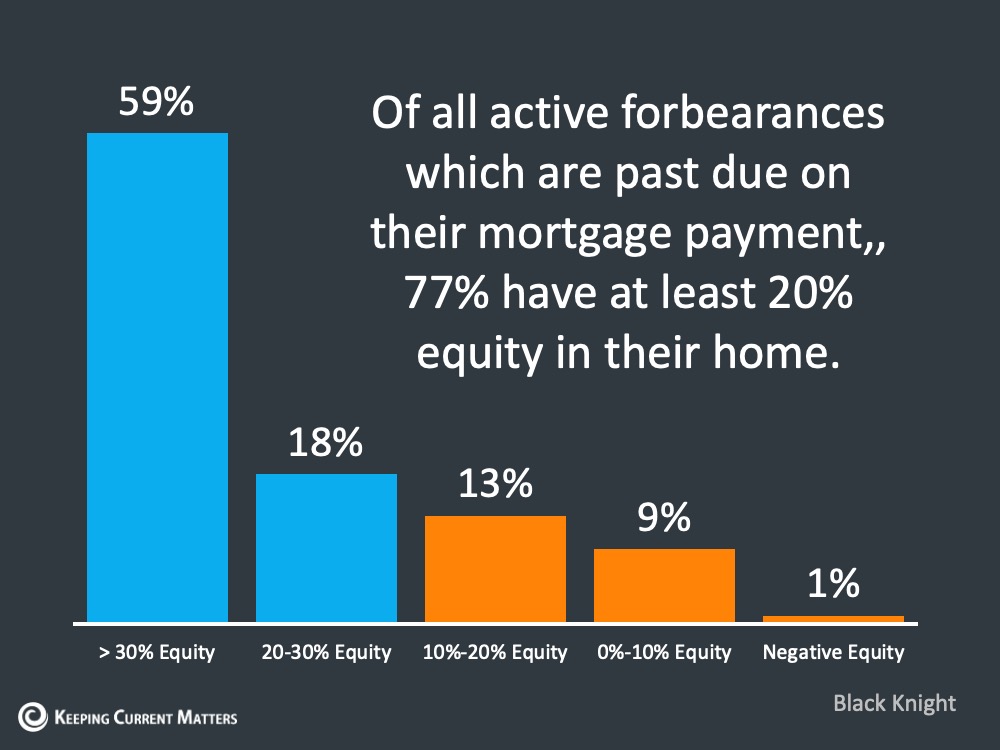
    • About 1.8 million loans in forbearance are seriously delinquent on their mortgage payments. (KCM)
    • 77% of the past due owners have at least 20% equity and 90% have at least 10% equity. (KCM)

    Economy & Unemployment:

    • Stock market earnings for Q2 2020 were down 44.1% year over year. For comparison, Q4 2008 earnings were down 69.1% year over year. (FactSet)
    • As expected Q2 2020 GDP was horrible, declining 9.5%, the largest decline ever recorded (recorded started in 1947). Prior to this, the largest drop was Q1 1958 with a decrease of 2.6%. Given that the recovery started in May, Q3 2020 GDP has the potential for positive growth. (Elliot Eisenberg)
    • The restaurant industry continues to suffer some significant setbacks. In July 100,000 restaurants closed temporarily, the southern and western regions having the most closures. (National Restaurant Association)
    • An estimated 8,000 hotels across the country may close permanently by October. Some investors consider these shuttered hotels as potential options for affordable housing. (American Hotel & Lodging Association)
    • New unemployment claims rose again slightly this week from last week to about 1.4 million. This is the second week of increases after 16 weeks of decreases. This week’s increase was only 12,000 week over week. Continuing unemployment increased slightly this week up to around 17 million. (US Department of Labor)
    • Unemployment rising is not indicative of low home buying activity. Mortgage availability is a bigger indicator. (KCM)

    Rental Market:

    • Rents in expensive areas closer to major employment hubs are declining. San Francisco has seen the largest drops and is down 7.4%. New York City has dropped 6.4% from March to June. Decreases are expected to continue. Areas further out are seeing increasing rents. (Apartment Hub)
    • With the expiration of the CARES Act and the expanded unemployment benefits, renters stand to be the hardest hit. (Zillow)
    • 91.3% of apartment renters made their July payments, a drop of only 2.1% year over year. (National Multifamily Housing Council)
    • Single-family rentals continue to perform the best. Like the for-sale inventory, the available rental inventory in Phoenix metro is very low and has a growing demand. (Phoenix Business Journal)
    • If you know anyone struggling to make their payments, please refer them to https://housing.az.gov/

    Emerging Trends:

    • In a recent Realtor.com survey, 21% of respondents said they are more likely to buy a home sight unseen.
    • According to Redfin, other metro searches hit a record high of 27.4% in Q2 2020, up from 26% in Q1 2020. Top cities searched on Redfin are Phoenix, Sacramento, Las Vegas, Austin, and Atlanta.
    • A commercial leasing company with 30,000 renters based in Florida has added a doctor to its full-time staff to help with wellness and to create a greater sense of confidence for the renters. (Realty Magazine)
    • Despite early opposite projections, NAR membership has increased this year. As of June, there were 1.397 million members, an increase of 1.7% year over year. NAR expects 2020 could see an all-time high membership exceeding 1.4 million. (Inman)
    • Nationally, June buyer showings increased over 50% year over year according to ShowingTime.
    • 32% of employees want to work from home permanently and are willing to make changes to get more space and/or more affordable housing.  (Tom Ferry)
    • Green Street Advisors predict that office demand could drop by 10%-15% as more people work from home more permanently. They also expect this will push workers from expensive gateway cities to more affordable sunbelt cities like Phoenix, Raleigh, and Charlotte.
    • Multifamily investors pull back on affordable housing investments as the eviction moratorium is extended. ITEX Group President, Chris Akbari said, “If that moratorium goes through, they’re probably not going to be investing in new projects. They’re going to be investing their time and capital in trying to protect their current projects that are going to be suffering from not having income coming in and not being able to evict people who were unable to pay their rent.”

    Real Estate News:

    • June had a 21% sales increase, the largest monthly increase since 1968 when NAR started gathering this data. Also, in June we had the lowest available inventory in 20 years. Total sales are projected to be down 6.4% in 2020 from 2019. Yes, there are fewer buyers but more importantly, there are far fewer sellers. (Matthew Gardner, Windermere Chief Economist)
    • NAR’s Pending Home Sales Index shows June increased 6.3% year over year and increased 16.6% from May to June. “It is quite surprising and remarkable that, in the midst of a global pandemic, contract activity for home purchases is higher compared to one year ago,” NAR Chief Economist Dr. Lawrence Yun said in a statement. “Consumers are taking advantage of record-low mortgage rates resulting from the Federal Reserve’s maximum liquidity monetary policy.”
    • Sales of new single-family homes increased by nearly 14% year over year in June. The highest new home sales month since 2007. (US Census Bureau & HUD)
    • On Wednesday, Zillow announced they are allowing most of its employees to work from home indefinitely. Google, Facebook, Twitter, and Slack also recently made the same statement. (Zillow)
    • A new partnership has been formed between Zillow and D.R. Horton, the nation’s largest homebuilder. The builder’s new home buyers may sell their current house to Zillow and may be eligible for cash credits and free local moving services. (Zillow)
    • According to Redfin, with increasing competition and bidding wars, 20% of winning offers are waiving inspection contingencies.
    • Zavvie, an iBuyer comparison platform exclusively for brokerages, and EasyKnock, a home purchasing and leaseback startup, announced a new partnership to help more homeowners sell their property through a variety of options. (Zavvie & EasyKnock)

    Final Thoughts:

    Matthew Gardner, Windermere Chief Economist said, “Sales will continue to recover in most markets and will only be held back because of a lack of supply. Of course, nobody can deny that we are still in very unique times, and significant uncertainty remains, but housing is performing relatively well and, as I have said to you for the past few months, I stand by my position that housing will lead us out of the current economic contraction.”

    Copyright 2020 by Sarah Perkins

  • Phoenix Area Real Estate Update 6/26/2020

    The top real estate experts and economists expect to see a strong housing market through the summer. While there is no reason to expect anything but positive growth, there are a number of outside factors that could negatively impact the housing market. It is important to be mindful while being optimistic. Shifts of this magnitude have never happened so quickly and there are no guarantees. This is not the market for “wait and see.”

    The AZ Market:

    Cromford Market Index (CMI): The CMI is the best leading indicator available (balance is 100, above 100 is a seller’s market and below 100 is a buyer’s market. Prices rise at 110 and drop at 90). On March 20, the CMI peaked at 241, and yesterday it was at 214.3, up from the bottom of 145.2 we hit on May 15 and up over 20 points in the past seven days.

    Supply: Our local inventory has been dropping every day since May 12. As of yesterday, our inventory is 54% below normal. In the past seven days we have dropped by 2.4%. Our total active inventory is down nearly 28% year over year. That sounds like a lot; then when we remove under contract accepting backups (UCB) we are down 42% year over year. We desperately need more listings.

    Demand: Pending sales are up over 18% month over month and up 15% year over year. Our demand is 1.4% below normal and increased by nearly 10% in the past fourteen days. According to Showing Time, in AZ, physical requests peaked on February 22 and then immediately dropped by 63% through mid-April. We made up that drop and then some and have seen a slight decrease of nearly 2% in the past week. Buyers cannot look at houses that are not for sale. Inventory continues to struggle to keep up with demand.

    Sales & Prices: Phoenix’s closed sales are down just over 15% year over year; nationally we are down 27% year over year. The median sales price is 8.4% up year over year. Dr. Lawrence Yun, NAR’s chief economist, said, “Sales completed in May reflect contract signings in March and April — during the strictest times of the pandemic lockdown and hence the cyclical low point. Home sales will surely rise in the upcoming months with the economy reopening and could even surpass one-year-ago figures in the second half of the year. New home construction needs to robustly ramp up in order to meet rising housing demand. Otherwise, home prices will rise too fast and hinder first-time buyers, even at a time of record-low mortgage rates.”

    Southeast Valley New Listings, Pendings, and Closings:  This week over week comparison for Tempe, Mesa, Chandler, Gilbert, Apache Junction, and Queen Creek since March 15 shows this week’s increased demand and decreased supply. Only time will tell if it is pent up demand or actual demand. Based on February’s demand it is likely to be actual. Closings always increase at the end of the month.

    Other AZ News:

    Multi-billion dollar business, Smead Capital Management announced their relocation from Seattle to the Camelback Corridor in Phoenix. Despite higher taxes in Phoenix, the company’s president and CEO, Cole Smead, is moving the company because of the lower cost of living and a larger pool of talent for recruiting in Phoenix. He also stated, “The unrest that has taken place in the city of Seattle … there really is not a downtown business community today.”

    Arizona gained 45,300 jobs in May, which is impressive since the economy did not reopen until May 16. That is an increase of 2.4% and above the national average. Arizona’s unemployment rate through May was 8.9% which is better than the national unemployment rate of 13.3% through May. Arizona is second to Utah for employment performance year to date, meaning our state retained the second most jobs of any state by percentage of the population.

    Phoenix metro is the fastest-growing major employment market in the country year to date. That means we have lost the fewest jobs, as a population percentage, in the country. This could have major implications for real estate. A larger employed population could lead to fewer potential issues down the road.

    Economy:

    Prior to COVID, we used quarterly economic data to analyze the market and create projections. Today’s environment is changing too quickly for that data to be sufficient so we have to use other options, daily or weekly data, known as high-frequency data, which is what we have to use today to analyze the economy. These are high-frequency data points:

    • Vehicle sales were up 44% in May over April. Vehicle sales make up about 20% of retail sales. Year over year retail sales are down only 6.1%.
    • Hotel occupancy rates reached nearly 42% last week, up from the bottom of 32% the week of May 18. It is still down 42% year over year.
    • TSA’s weekly traveler report shows the week of June 13 we were down 82% year over year which is better than the 91% year over year drop we had in mid-May.
    • According to OpenTable, restaurant reservations are down 64% year over year as of June 18.
    • Seated diner traffic in Phoenix is down 51.2% year over year, an improvement from the year over year decline of 84% last month.
    • Steve Hafner, the CEO of OpenTable, predicts up to 25% of US restaurants will permanently close. The Independent Restaurant Coalition predicts up to 80% of independent restaurants will close permanently. There are roughly one million restaurants nationwide, that prior to the pandemic employed roughly 15.6 million people.

    National Unemployment:

    There were 1.4 million new unemployment claims filed this week bringing the total number from mid-March to 47 million. Continuing claims dropped slightly to 19.5 million. Check out this chart from Matthew Gardner, Chief Economist for Windermere.

    Forbearance:

    According to Elliot Pollack, there are roughly 100 million loans, of varying types, on some sort of COVID relief program. This includes 4.2 million mortgages, 79 million student loan accounts, 7.3 million car loans, 1.3 million personal loans, and millions not paying rent or credit card balances.

    The good news (for lack of a better term) came from the Mortgage Bankers Association when they announced mortgage loans in forbearance decreased for the first time since March. For the week ending on June 14 total mortgages in forbearance dropped to 4.2 million, down from 4.3 million the week before. 8.48% of mortgages are currently enrolled in a forbearance program.

    Emerging Trends:

    • According to Zillow 2.7 million adults aged 18-25 have moved back in with their parents during March and April. That is a 9.7% increase in April year over year and 1.4% of the national rental market.
    • Home improvement spending is up. According to Lending Tree personal loans for home improvement is up nearly 8% year over year.
    • Large office buildings and other commercial property owners are re-evaluating policies regarding elevator and stair usage in order to maintain social distancing. High rise office buildings have to come up with new solutions to transport people to their destination.
    • Worldwide mass transit demand is down 59% since January.
    • According to the Urban Land Institute (ULI), there are about 13.5 million families renting making up about 1/3 of total renters. The ULI is calling for developers to create more rental options for families as this sector is expected to grow.
    • Shifts between the suburbs and the city are cyclical. From 2010 through 2018 cities grew faster than suburbs but as time went on the city demand slowly decreased as the suburban demand increased faster. Today’s shift towards the suburbs started in 2019 but was significantly escalated by the pandemic.
    • Vacation rentals are in high demand. The ones that are doing the best are the ones within about 2.5 hours of a large metro area. More people are driving to their vacations than flying.
    • As more businesses relocate to the suburbs, car dependency is expected to grow.
    • According to a survey by Apartment List, 30% of respondents said that they are less likely to move due to COVID 19. The report stated, “While Americans have historically moved more frequently than those in many other countries, the U.S. mobility rate has actually been declining for the past 35 years. According to the Census Bureau, over 20 percent of Americans changed homes in 1985; by 2019, that rate had been cut in half.”

    Other Real Estate News:

    • 42% of US homes are owned free and clear
    • Mortgage loan applications are up 20.1% year over year at an 11 year high.
    • There are 128 million houses in the US. 22.7 million are non-owner occupied. 6 million of those are owned by institutional investors like Blackstone. 16.7 million are owned by regular people or small investors.
    • Starbucks is changing its café’s footprints and closing about 400 locations while adding 300 new locations that do not offer dine-in options.
    • Homesnap and eCommission launched a new payment option that allows agents to purchase Homesnap products using future commissions.
    • According to HireAHelper.com the moving industry will have a revenue drop this year in a range of 12.2%-19.9% or an estimated $1.5 billion to $2.5 billion.
    • The exclusive iBuyer partnership with Offerpad and Keller Williams has ended, likely because of last week’s announcement that Offerpad will be listing and selling along with iBuying, putting them in direct competition with Keller Williams. KW will now also be working with other undisclosed investors for its iBuyer program.

    Final Thoughts:

    Coldwell Banker CEO, Ryan Gorman said, “If you’re contemplating moving, or are one of many people who are contemplating accelerating your life plan a bit, now is a moment to get your property into inventory. Get it prepared, get it priced, and get it on the market.”

    This is a great time to sell. Do not get distracted by the negative media; the best way to be part of the solution is by getting accurate information out and guiding your clients with the facts.

    Copyright 2020 by Sarah Perkins

  • Afternoon Bite 5/18/2020 (Video)

    Every Monday Amber Kovarik with Guild Mortgage and I spend 15 minutes (or less) talking about what is currently happening in the real estate market, title, and lending. We give a few key points to share without taking up too much time.

    Today’s Big Takeaways:

    • Cromford Market Index, the best leading market indicator we have, was a 145.8 yesterday. Above 100 is a seller’s market, below 100 is a buyer’s market.
    • Tuesday 5/12 1st day of inventory decline since March 20
    • Thursday 5/14 1st day of no CMI drop since March 20, it fell nearly 100 points in about 2 months. The past 3 weeks the drop has slowed but hasn’t stopped
    • Saturday 5/16 we had our 1st CMI increase and our first demand increase from March 20
    • The demand dropped nearly 28% in the past 2 months and is now increasing
    • We need more inventory. We are still 45% below where we should be
    • Prices remain stable
    • 33 million people have filed for unemployment benefits, however (only) 26 million are receiving unemployment because 7 million are already back at work.
    • 40% of the unemployed make less than $40K a year, it is unlikely that a large proportion were potential home buyers, which is why demand remains more stable
    • In April 76% of people paid their mortgage and/or rent in full
    • In May 69% of people paid their mortgage and/or rent in full
    • On Thursday the CFPB, FHFA and HUD in a joint effort launched a website with info on payment assistance for both renters and borrowers outlined in the CARES Act: https://www.consumerfinance.gov/coronavirus/mortgage-and-housing-assistance/
    • Small business owners who received PPP loans are eligible for a home loan.
    • Still no updated guidance on forbearance. There is optimism that this will be addressed soon. Because this is an issue: Simply inquiring about forbearance puts a borrower into forbearance and they will not be able to obtain a new loan until they have 12 months of consecutive payments after being placed in forbearance. Look for this to change as this is very detrimental for those who never end up missing a payment.

    copyright 2020 by Sarah Perkins

  • Afternoon Bite 5/4/2020 (Video)

    Every Monday Amber Kovarik with Guild Mortgage and I spend 15 minutes talking about what is currently happening in the real estate market, title, and lending. We give a few key points to share without taking up too much time.

    Today’s Big Takeaways:

    • Physical showing requests have increased in Arizona since 4/12/2020 by 40%
    • New listings hitting the market in the southeast valley are up 5% the week of April 19th over the week of April 12th
    • New pendings in the southeast valley are up 15% the week of April 19th over the week of April 12th
    • Zillow traffic is up 13% year over year as of mid-April
    • No evidence of prices dropping
    • According to the CARES act, if a borrower calls and asks a question about forbearance then they are automatically added to the count regardless of whether or not they make their mortgage payment. The numbers are unreliable.

    copyright 2020 by Sarah Perkins

  • Halloween & Tight Inventory

    Halloween & Tight Inventory

    Tight inventory in the Phoenix metro real estate market continues.

    We typically see a slow down in residential real estate this time of year. This is not only true in the Phoenix metro market but across the country. We have seen a slight increase in listings but not enough to balance out the demand. Tina Tamboer with the Cromford Report states that a market frenzy takes place when more listings go pending then go active. On Tuesday 10/30/19, in the southeast valley, there were only 66 new listings and 90 went pending. Only looking at a one day snapshot doesn’t show the whole story. The day of the week matters. Mondays and Tuesdays we see more properties go pending and Thursday and Friday we see more properties hitting the market. As it stands, looking at a full week, though, Friday 10/25/19 through yesterday, Thursday 10/31/19 we had 598 new listings with 638 going pending in the same time period. These numbers are for the southeast valley. We can clearly see that pendings are outpacing new listings. This will continue pushing up prices and making things a bit tougher for buyers, particularly those looking under $350,000.