Tag: #lydiawietsma

  • AZ Forbearance Update (video) 12/30/2020

    In this 15 minute video, Lydia Wietsma and I discuss this weeks’ biggest news in forbearance. For a short holiday week, a lot is happening.

    One – Forbearance Numbers.

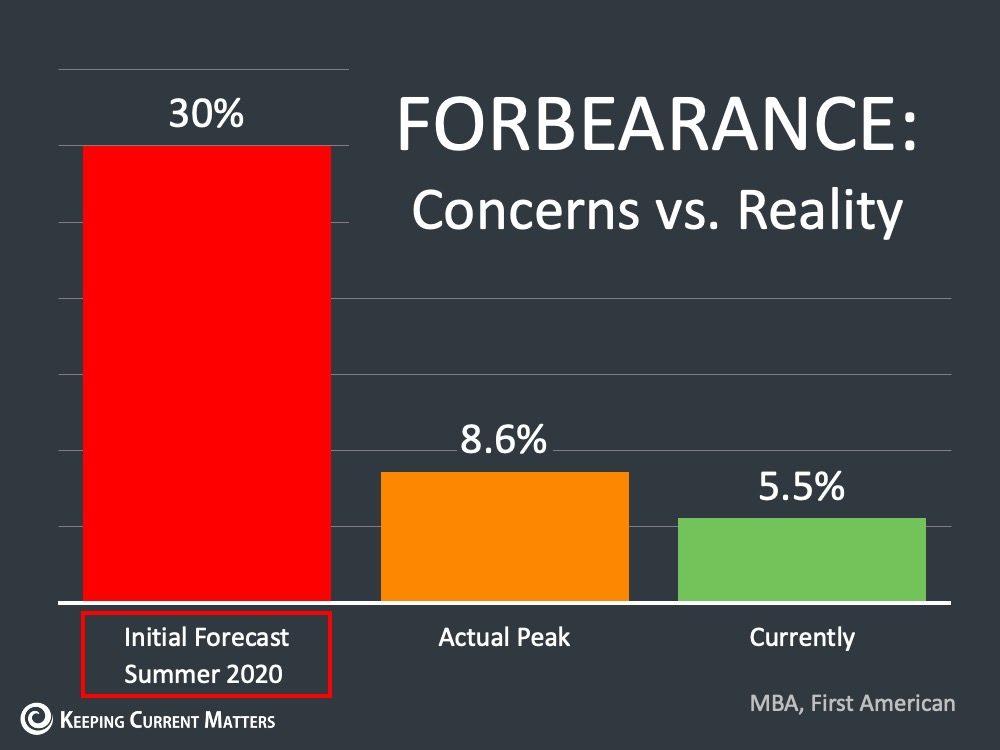
    When the CARES Act passed in March, creating forbearance plans, it was expected that around 40 million borrowers would enter an available plan. In reality, since March, about 4.3 million entered a plan. Now, as we end the year, 5.5% of loans or about 2.7 million borrowers remain in a forbearance plan. And nearly 79% of those in forbearance are on extension. Initial plans are 3 – 6 months long and the extensions are 3 – 6 months long.

    Based on these timelines, a huge number, 367,000, forbearance plans are set to expire in January. How many will go on extension remains to be seen.

    Roughly 45% of borrowers leaving forbearance are caught up and current on their payments.

    Two – FHA Extension.

    The biggest news in forbearance is FHA’s extension for entering a forbearance plan. If a borrower has an FHA loan they can now call their servicer through February 28, 2021 to get started on a forbearance plan.

    For all other mortgage types, the deadline is tomorrow.

    Three – Delinquencies.

    The biggest news in forbearance is FHA’s extension for entering a forbearance plan. If a borrower has an FHA loan they can now call their servicer through February 28, 2021, to get started on a forbearance plan.

    For all other mortgage types, the deadline is tomorrow.

    Four – Equity.

    For anyone concerned about what the market is doing right now, please keep in mind these things:

    • Demand continues: Mortgage applications are still increasing and for the week ending on 12/18, mortgage applications are up 26% year over year.
    • Prices have been increasing since 2012.
    • American homeowners with a mortgage have an average of $195,000 in equity, a struggling homeowner can sell their home and walk away with cash in their pocket.

    In 2020 housing has been the leading sector in our entire economy. Experts predict more of the same in 2021. Rates are expected to stay low with demand high. Many expect to see a strong spring selling season, as long as inventory increases.

    Five – Increased Inspections.

    Lydia is seeing a lot more servicing requests from the loan servicing company she works with. Last week had a 3 day work week and this week is 4 and each week she has gotten 10 inspection requests, which is more than she has received in two back to back weeks this year. She was told that they are hiring and training more employees now too. Does this mean that they are gearing up for some big things in 2021? The answer remains to be seen.

    Six – Not Free Money.

    The forbearance plan deferrals are not forgiven, they are to be repaid. This is not free money. Lydia shared another concerning story about borrowers who were not negatively affected by the pandemic who took forbearance and spent the money elsewhere. How many instances of this will come out? We know there will be consequences. The significance of those consequences will be seen in the coming months.

  • AZ Forbearance Update (video) 12/23/2020

    In this 13 minute video, Lydia Wietsma and I discuss the most recent five things you need to know about forbearance. The majority of borrowers leaving forbearance are current upon plan exit, only 13% of borrowers leaving their forbearance plan do so without having a loss mitigation plan in place. There is not much time left if someone needs to take advantage of these CARES Act benefits.

    We do these updates to help real estate professionals and consumers understand forbearance, and to let struggling borrowers know that although experts are forecasting a tough winter, there are options.

    One.

    Last week total number of mortgage loans now in forbearance increased slightly from 5.48% to 5.49% as of December 13, 2020. According to MBA’s estimate, 2.7 million homeowners are in forbearance plans.

    While the news of an increase is not great, we need to remember total loans in forbearance was expected to hit 30% and our peak was 8.6%.

    Two.

    Forbearance Numbers by Stage:

    • 18.78% of total loans in forbearance are in the initial forbearance plan stage, which is up very slightly from the previous week which was 18.72%.
    • 78.54% are in a forbearance extension, this is down from the previous week which had 78.72% in extension.
    • 2.69% are forbearance re-entries which is up from the previous week of 2.56%. This group has been slowly growing over the past few weeks.

    About 13% of the borrowers exiting forbearance are still behind on their payments and left their program without a loss mitigation plan in place. This is the group that needs to know their options.

    When you look at this slide, this means that we are looking at roughly 116,000 borrowers in this situation who will need guidance.

    Three.

    While the new stimulus bill covers renters, landlords, extends the PPP loan options for small businesses, extended unemployment benefits, and more, it does not extend forbearance plan protections.

    Eviction and foreclosure protections were extended through 1/31/2021.

    Four.

    Borrowers who want to get started in a forbearance plan have 4.5 business left to call their servicer to get started. Time is of the essence.

    Five.

    Lydia is receiving more and more inspection requests from the servicer she works with. So far this week she has received 10 requests. The activity is picking up.

    When exiting forbearance borrowers have a number of options; not all of them require the owner to sell their property. Some of these options include:

    • Utilizing a 401K in two ways.
      • Individuals are allowed to borrow from their 401K with the option of paying themselves back with interest, since it is a loan being paid back, essentially paying yourself back there are no penalties. Talk to your 401K administrator for details.
      • Through provisions of the CARES act, an individual can also withdraw an amount of their 401K with no penalties. Again, talk to your 401K administrator for details.
    • Permanent loan modification or refinance, after making 3 payments in a row, to something that allows borrowers to stay. Some scenarios include adding the forborne amount at the end of the loan, some pay a lump sum to get caught up, some offer payment plans to get caught back up.
    • Rentals are in high demand with quickly appreciating values. What about moving out of the property and renting it out to make up the difference in payments.
    • Sell and buy something more affordable, after 3 payments in a row have been made. Pay off the loan and get a new loan with more agreeable terms.
    • Sell, pay off the loan and forborne the amount, and rent/move in with family.
  • AZ Forbearance Update (video) 12/16/2020

    In this 13 minute video, Lydia Wietsma and I discuss the most recent five things you need to know about forbearance. The majority of borrowers leaving forbearance are current upon plan exit. There is not much time left if someone needs to take advantage of these CARES Act benefits.

    We do these updates to help real estate professionals and consumers understand forbearance, to let struggling borrowers know that although experts are forecasting a tough winter, there are options.

    One.

    Lydia and I have been watching the numbers very closely. We had our first 2 weeks of increases, followed by a week of staying flat, and now last week, we had a decline in total mortgage loans in forbearance. It dropped from 5.54% to 5.48% or roughly 2.7 million borrowers.

    While people are leaving their forbearance plans, more are leaving through a loan modification versus which indicates that not everyone has been able to get caught back up, even if they are working.

    Another point to make here is that the initial forbearance requests increased to the highest level since August 2. Servicer requests (renewals or initial) increased to the highest point since April 19. Lydia, that means people are watching our videos and making those calls as we get closer and closer to the cut off at the end of the year. Either our informational videos or the fact that the unemployment numbers are worse than experts predicted, while still moving modestly in the right direction.

    To break the forbearance numbers down by stage, of the borrowers in forbearance, just under 19% are in the initial stage, just under 79% are on extension and about 2.5% are re-entries.

    Two.

    Of the cumulative forbearance exits for the period from June 1 through December 6, 2020:

    • 30% continued to make their payments throughout the term.
    • 16% were caught up upon plan exit
    • 13% did not make all of their payments and exited forbearance without a loss mitigation plan in place.

    Three.

    The Cares Act created a lot protections for homeowners and renters. However, upon the expiration of the eviction moratoriums struggling renters will be very exposed. The provisions for homeowners are considerably more extensive. Borrowers in forbearance have the benefit of time within a forbearance plan. And even if borrowers are late and then proceed towards foreclosure, that process takes about 6 months. How much time does a renter get? This is another benefit of homeownership.

    Also remember homeowners have gained a lot of equity this year and there are options available. There are about 6755 active listings in ARMLS, we should have 25,000, prices will continue to rise.

    Four.

    Including today and Christmas Eve there are only 11 business days left for borrowers to call their servicer and get started on a forbearance plan. It may be extended but currently the program expires on 12/31/2020.

    Servicers are getting more active. Lydia’s requests are increasing, yesterday she had 6 inspection requests. They are getting ready to move forward on loans that are delinquent as soon as the moratoriums are lifted. The foreclosure moratorium expires 1/31/2021.

    Five.

    When exiting forbearance borrowers have a number of options; not all of them require the owner to sell their property. Some of these options include:

    • Utilizing a 401K in two ways.
      • Individuals are allowed to borrow from their 401K with the option of paying themselves back with interest, since it is a loan being paid back, essentially paying yourself back there are no penalties. Talk to your 401K administrator for details.
      • Through provisions of the CARES act, an individual can also withdraw an amount of their 401K with no penalties. Again, talk to your 401K administrator for details.
    • Permanent loan modification or refinance, after making 3 payments in a row, to something that allows borrowers to stay. Some scenarios include adding the forborne amount at the end of the loan, some pay a lump sum to get caught up, some offer payment plans to get caught back up.
    • Rentals are in high demand with quickly appreciating values. What about moving out of the property and renting it out to make up the difference in payments.
    • Sell and buy something more affordable, after 3 payments in a row have been made. Pay off the loan and get a new loan with more agreeable terms.
    • Sell, pay off the loan and forborne the amount, and rent/move in with family.
  • AZ Forbearance Update (video) 12/9/2020

    In this 12 minute video, Lydia Wietsma and I talk about the five things you need to know about forbearance. Time is short but there are options. Forbearance programs are available through the end of the year. Watch the full video for details.

    We do these updates to help real estate professionals and consumers understand forbearance, to let struggling borrowers know that although experts are forecasting a tough winter, there are options.

    One.

    We have talked about 3 weeks creates a trend. Well, after two weeks in a row of slight forbearance count increases, we were closely watching the numbers. And this past week, they remained flat, unchanged at 5.54% of loans and roughly 2.8 million loans in a forbearance plan.

    Initial stage forbearance plans decreased. Like the 2 weeks prior, this past week had increases in forbearance plan extensions and re-entries. Nearly 78% of all loans in forbearance are on extension.

    The surging cases nationwide led experts to believe we would see forbearance numbers rising more than they have.

    Two.

    Of the cumulative forbearance exits for the period from June 1 through November 29, 2020:

    • About 46% represented borrowers who continued to make their monthly payments during their forbearance period or made up the past-due amount when exiting their plan.
    • 13% represented borrowers who did not make all of their monthly payments and exited forbearance without a loss mitigation plan in place yet.
    • December marks the next large volume of expirations, with more than 1 million (39%) active plans currently set to expire.
    • Based on the current distribution, approximately 175,000 forbearance plans will reach their 12-month expiration in January/February, with more than half a million reaching that expiration mark in March 2021

    Of the nearly 6.5 million homeowners that have entered forbearance plans since the beginning of the pandemic, only 43% (2.77 million) remain in active forbearance as of mid-November.

    Three.

    Delinquencies: Keep in mind all loans in forbearance that are late are marked as delinquent they are not being penalized for being late.

    Delinquencies improved in October, decreasing by 3.3% to 6.44%, their lowest level since March. At 1.8 million, seriously delinquent loans, which are 90+ days late is dropping but is still 5x what it was in February.

    Arizona’s delinquency rate is 5.4%, (National is 6.4%) there are 13 states with lower delinquency rates than AZ so we are almost in the top-performing quarter of the states.

    Four.

    Time is of the essence 14.5 business days (Christmas Eve is only half) Move quickly, get into forbearance if necessary. Do not panic sell, there are options.

    Five.

    Servicing timelines increased. Usually provide 24 hours and now 48 hours. Are things changing? We are watching.

  • AZ Forbearance Update (Video)

    In this 11 minute video, Lydia Wietsma and I discuss the four things you need to know about mortgage forbearance. The bottom line is that borrowers have options but they have to take action NOW as the COVID forbearance options are expiring in 21 business days. Watch the full video for details.

    We do these updates to help real estate professionals and consumers understand forbearance, to let struggling borrowers know that although experts are forecasting a tough winter, there are options.


    One.

    Time is of the essence. There are 21 business days left this year to get into a forbearance plan. The CARES Act programs expire on 12/31/2020.

    *Please note that FHFA extended their foreclosure and eviction moratorium to 1/31/2021 after this video was recorded.*

    Two.

    After 25 weeks without having an increase in loans in forbearance last week was the second week in row with increases. We went from 5.48% to 5.54% of loans are in forbearance which is around 2.8 million borrowers. The biggest reason for the increase is that fewer borrowers are leaving their forbearance programs than in the previous weeks. Other reasons are that re-entries increased slightly and loans in extension increased slightly. Initial entries remained about the same.

    Three.

    Don’t panic sell. Call someone to guide you through the process that is best for you and your current situation.

    Four.

    Foreclosures are coming. Not a wave but there will be some. Foreclosures have specific timelines before the property goes to auction and struggling borrowers have options.

  • AZ Forbearance Update (Video) 11/25/2020

    In this 11 minute video, Lydia Wietsma and I discuss the latest news in forbearance and emerging trends. The bottom line is that borrowers have options but they have to take action NOW as the COVID forbearance options are expiring in 5 weeks. Watch the full video for details.

    We do these updates to help real estate professionals and consumers understand forbearance, to let struggling borrowers know they have options, and to reassure everyone that today’s market is not like the 2005 bubble/2008 crash.

    Today’s Takeaways:

    We are in the busiest 3rd quarter real estate has seen. The crazy low inventory has pushed house prices up around 20% this year. The news of the highly effective vaccines pushed the stock market even higher as the bull market continues.

    With all of the good news, there is some less good news. Unemployment increased slightly. The number of loans in forbearance increased, very slightly last week from the previous week. It went up from 5.47% to 5.48% of loans are in forbearance, or roughly 2.7 million loans.

    The increase comes from a reduced number of borrowers leaving their forbearance plans. The past few weeks we have seen a large number of forbearance plans exits. This past week saw a reduction in exists. The new entries remained about 21% of all loans in forbearance and just under 77% are in an extension plan. Re-entries remain at just under 2%.

    “Incoming housing market data remain quite strong, with existing-home sales in October reaching their fastest pace since 2005, and the inventory of homes on the market hitting a record low. However, renewed weakness in the latest job market data indicates that many homeowners are continuing to experience severe hardships due to the pandemic and still need the support that forbearance provides.”


    Mike Fratantoni, Chief Economist for MBA

    Affordability is taking a main stage with economists and housing experts. According to the Home Opportunity Index, the Phoenix area saw a nearly 3% decrease in affordability from Q2 to Q3 while wages remained the same. The inequities in the balance is putting pressure on our market which will only increase.

    Enrollment into the current COVID-19 forbearance protections created in the CARES Act are expiring on 12/31/2020. Struggling borrowers need to contact their mortgage servicer for options before the end of the year. The time is now to get started.

    The servicer Lydia works with is changing their tune slightly. The questions are changing as they are asking about the state of the owner, for example, they are asking: Are the owners living in the property? Is it abandoned? Etc.

  • AZ Forbearance Update (Video) 10/28/2020

    In this 12 minute video, Lydia Wietsma and I discuss the latest news in forbearance and emerging trends and improvements in the situation and options. The bottom line is that people have options but they have to take action, watch the full video for details.

    Today’s Takeaways:

    Forbearance:

    Straight from MBA, “WASHINGTON, D.C. (October 26, 2020) – The Mortgage Bankers Association’s (MBA) latest Forbearance and Call Volume Survey revealed that the total number of loans now in forbearance decreased by 2 basis points from 5.92% of servicers’ portfolio volume in the prior week to 5.90% as of October 18, 2020. According to MBA’s estimate, 3.0 million homeowners are in forbearance plans. 

    By stage, 25.02% of total loans in forbearance are in the initial forbearance plan stage, while 73.14% are in a forbearance extension. The remaining 1.84% are forbearance re-entries.”

    This decrease is much smaller than the previous two weeks decreases when roughly 400,000 loans came out of forbearance.

    One reason given for the 400,000 borrowers exiting forbearance plans over the past three weeks is because borrowers do not know they can stay on or further negotiate their plans. If borrowers do not contact their lenders or servicers they are automatically removed from their forbearance plan. This is a big deal.

    News:

    FHFA and FHA extended pandemic forbearance plan options to single-family owners with FHA loans through 12/31/2020. It was initially set to expire 10/30/2020. FHA forbearance plans are 6 months with an option to extend for an additional 6 months.

    Delinquencies:

    From the September Black Knight First Look Report all about delinquencies:

    • “The number of seriously delinquent mortgages (90+ days) fell by 43,000 in September, marking the first such improvement in serious delinquencies since the start of the pandemic
    • More than 2.3 million homeowners – five times the number entering 2020 – remain 90 or more days past due, but not in foreclosure
    • The national delinquency rate fell in September to 6.66%, down from 6.88% the month prior
    • Early-stage delinquencies continue to show strong improvement, with rolls from current to 30-days delinquent, as well as the number of borrowers less than 90 days delinquent, having returned to pre-pandemic levels”

    Lending:

    According to the MBA, purchase mortgage originations for 2021 are expected to increase by 8.5% from 2020. They expect 2021 will hit an all-time record of $1.54 trillion for purchase originations!

    Rates are also expected to rise in 2021 likely to reach 3.3-3.5%

    Real Estate:

    Existing home sales surged 21% in September year over year, pushing us to a seasonally adjusted annual rate of 6.5 million sales, all while inventory is at record lows. (NAR)

    • Pre-pandemic 2020 projections were for about 5.8 million sales.
    • In 2019 there were 5.35 million sales.
    • In 2018 there were 5.5 million sales.
  • AZ Forbearance Update (Video) 10/21/2020

    In this 13 minute video, Lydia Wietsma and I discuss the latest news in forbearance and emerging trends and where borrowers can go for help. We have some suggestions for conversations with clients and borrowers. The bottom line is that people have options but they have to take action, watch the full video for details.

    Forbearance:

    • Over 6 million households (renters and owners) were either late or missed their full or partial payment in September.
    • 8.5% or 2.82 million renters missed their payment.
    • 7.1% or 3.37 million owners missed their payment.
    • Mortgages in forbearance dropped from 6.32% to 5.92% to roughly 3 million loans, down from the previous week’s 3.2 million loans.
    • This removes another 200,000 from forbearance programs. One reason given for the 200,000 this week and last week coming off is that borrowers do not know they can stay on or further negotiate their plans. If borrowers do not make any phone calls or connect with their lenders or servicers they are automatically being removed from their forbearance plan. This is a big deal.

    Mike Fratantoni, MBA’s Senior Vice President and Chief Economist said, “The share of loans in forbearance declined across all loan types, primarily because of borrower forbearance plans expiring at the six-month mark. Federally backed loans under the CARES Act are eligible to be extended for up to 12 months, but borrowers must contact their servicer for an extension. Without that contact, borrowers exit forbearance, whether they are delinquent or current on their loan. Borrowers with federally backed mortgages should contact their servicer if they still have a hardship due to the pandemic.”

    Silver Lining:

    According to the Mortgage Bankers Association (MBA), purchase mortgage originations for 2021 are expected to increase by 8.5% from 2020. They expect 2021 will hit an all time record of $1.54 trillion!

    The added demand, to an already high demand market, will continue pushing prices up which will help struggling homeowners who need to sell. They will have a greater equity position giving them more options and having options is good.

    Resources:

  • AZ Forbearance Update (Video) 10/7/2020

    Lydia Wietsma and I discuss the latest news in forbearance trends and where borrowers can go for help. We have some suggestions for borrowers to stay in their homes after they exit their forbearance programs. Click below to watch our 19 minute video.

    Today’s Takeaways:

    The worst thing for the housing market is to have empty houses. We went through that 10 years ago. This time around with the forbearance programs, they were designed to keep homeowners in their homes, which keeps the housing market healthy.

    Let’s talk about what we know. We know that for the past 17 weeks in a row, total loans in forbearance has continued to drop. Last week the rate dropped to 6.81%, down from the previous week at 6.87%. This means roughly 3.4 million mortgages in forbearance.

    “The significant churn in the labor market now, more than six months into the pandemic, is still causing financial distress for millions of homeowners. As a result, more than 70 percent of loans in forbearance are now in an extension.”  

    Mike Fratantoni, MBA’s Senior Vice President and Chief Economist

    In order for a borrower to leave forbearance they have to make 3 consecutive payments and come up with a plan with their servicer or lender on how they will pay back the forborne amount that was deferred while they were in forbearance. One thing that is very important for everyone to know is that forborne payments will be repaid, they are not forgiven.

    There are a number of ways a borrower can leave forbearance, not all of them require the owner to sell their property. Some of these options include:

    • Utilizing a 401K in two ways.
      • Individuals are allowed to borrow from their 401K with the option of paying themselves back with interest, since it is a loan being paid back, essentially paying yourself back there are no penalties. Talk to your 401K administrator for details.
      • Through provisions of the CARES act an individual can also withdraw an amount of their 401K with no penalties. Again, talk to your 401K administrator for details.
    • Permanent loan modification or refinance, after making 3 payments in a row, to something that allows borrowers to stay. Some scenarios include adding the forborne amount at the end of the loan, some pay a lump sum to get caught up, some offer payment plans to get caught back up.
    • Rentals are in high demand with quickly appreciating values. What about moving out of the property and renting it out to make up the difference in payments.
    • Sell and buy something more affordable, after 3 payments in a row have been made. Pay off the loan and get a new loan with more agreeable terms.
    • Sell, pay off the loan and forborne amount and rent/move in with family.

    We are watching total delinquencies as well, which is tougher to monitor but what we are seeing is that new single family delinquencies continue to drop but older delinquencies, 90 days and up are growing. Here is a chart that is hard to see but shows that residential delinquencies are decreasing. The huge one is lodging.

    I do want to touch briefly on unemployment. September’s numbers came out last Friday showing that our economy added 661,000 jobs. This was below expectations. They did revise up the total of new jobs from August though. The unemployment rate is now 7.9% and we have made up over 50% if jobs lost in March and April.

    Elliott Pollack expects a full recovery of all industries in Arizona by the end of 2022. It would be great to be back at full employment in two years.

    Please share this with your colleagues and clients.

    Copyright 2020 by Sarah Perkins

  • AZ Forbearance Update (Video) 9/30/2020

    Lydia Wietsma and I discuss the latest news in forbearance trends and where borrowers can go for help. Freddie Mac shared some interesting info this week!

    Today’s Takeaways:

    Unemployment:

    The national unemployment rate is 8.4%. Weekly initial claims have dropped below 1 million but remain high. Our continuing unemployment has dropped below 13 million.

    Some headlines read “25 million American remain unemployed.” Those numbers are based on all of the different unemployment categories. We mostly talk about initial and continuing claims. There is also the Pandemic Unemployment Assistance program which, for the first time ever, provides unemployment benefits to independent contractors who otherwise are not eligible for regular benefits. There are about 12 million people on this program. (US Department of Labor)

    Arizona has regained 60% of the jobs lost since in March and April and the state’s unemployment rate of 5.9%. Which is #3 for best performing state job market, behind Utah and Idaho. (Elliott Pollack)

    Most of the unemployment is focused in service sectors, which the largest group in leisure & hospitality including restaurants. Also, in this group are non-life threatening medical services like dentist offices. The average weekly income of these sectors is $400. This means that today’s level of unemployment benefits do replace lost wages. (Wells Fargo)

    An unemployment rate of 4.1%-4.7% is considered full employment. The US Bureau of Labor Statistics and Wall Street Journal survey of economists projects 2023 to be the year we get back to being, at least close to full employment. (KCM)

    Demand:

    Real estate demand is pushing prices higher giving owners more equity and more options should they refinance, modify, or sell. If homeowners need to sell they will be able to do so easily and quickly without going into foreclosure or doing a short sale.

    28.7% of Redfin’s users looked to move to another area, up from 27.4%, and is the highest percentage yet. Sacramento, Austin, and Phoenix topped the charts for destination cities; affordability being one the biggest drivers.

    Our demand is 26% above normal.

    Given the unexpected, continued demand, despite high unemployment rates, major real estate companies adjusted their future price projections significantly. Zillow initially predicted a 3% decrease in home prices and now is predicting a 3.6% increase. Corelogic the outlier from the start went from a 6.6% decrease to a 0.6% increase. (must have missed the 16% appreciation in greater Phoenix!)

    Forebearance:

    • Total loans in forbearance dropped to 6.93%, down from 7.01% last week, continuing the 5-month decline. Roughly 3.5 million loans are in forbearance programs. (MBA)
    • Roughly 680,000 homeowners are late on their mortgage and are eligible for a forbearance plan but are not in a forbearance plan. A recent survey shows the lack of participation is due to confusion, fear, and lack of awareness of such options. (Wall Street Journal)
    • The CFPB, FHFA, HUD, VA, and USDA created a joint effort mortgage and rental assistance platform, for more information visit https://www.consumerfinance.gov/coronavirus/mortgage-and-housing-assistance/

    Freddic Mac & Forbearance:

    • In order to be approved for new forbearance programs, borrowers must show evidence of being negatively affected by COVID
    • Forbearance prevents foreclosure proceedings for a time period only. Borrowers in forbearance will have a hit to their credit score.
    • Freddie Mac is not contacting borrowers directly; it expects servicing companies and Realtors need to get the message out.
    • To find out if a loan is with Freddie Mac, click here https://ww3.freddiemac.com/loanlookup/
    • To find out if a loan is with Fannie Mae, click here https://www.knowyouroptions.com/loanlookup